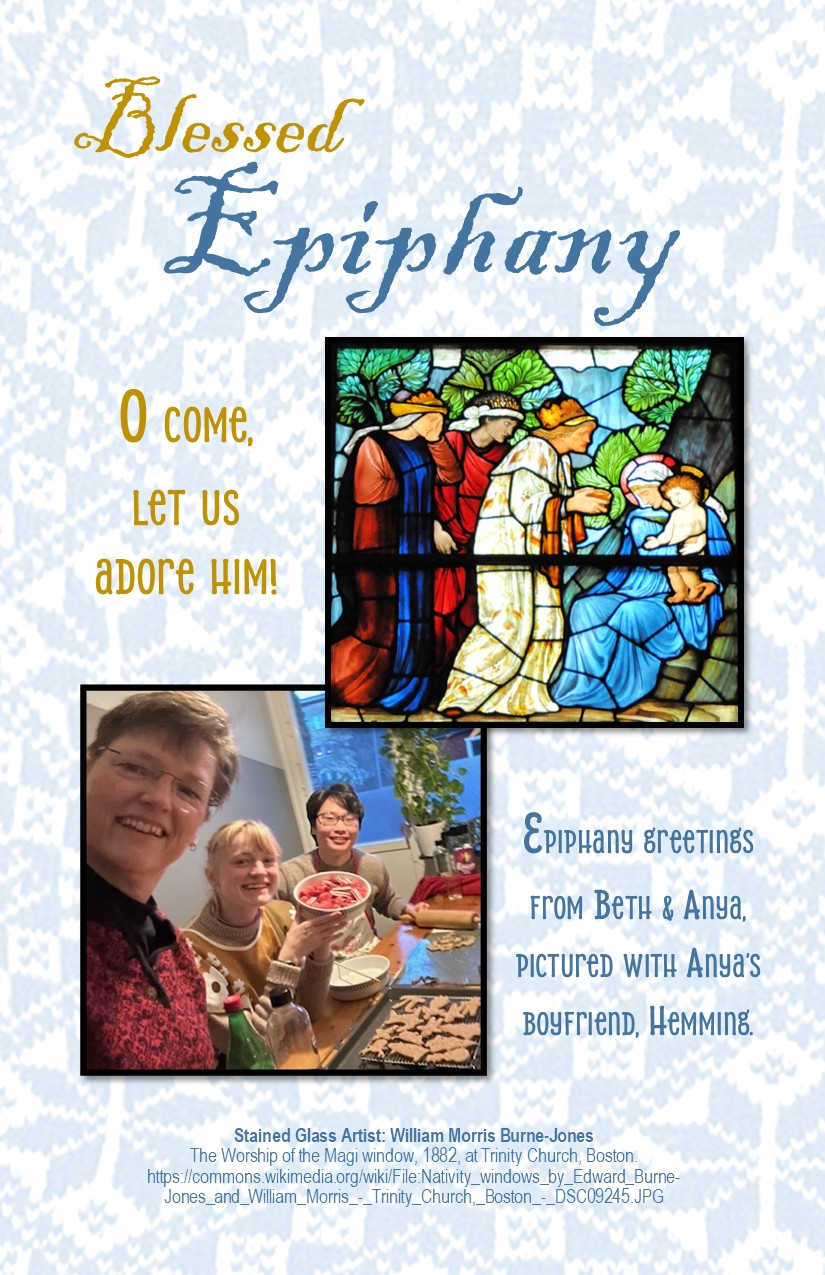
Today, we celebrate one of the amazing multicultural moments in Jesus’ life when the magi from the East came to worship Jesus, bringing special gifts. Truly, Jesus is for all peoples.
Matthew 2:1–2 Now after Jesus was born in Bethlehem of Judea in the days of Herod the king, behold, wise men from the east came to Jerusalem, saying, “Where is he who has been born king of the Jews? For we saw his star when it rose and have come to worship him” (ESV).
The multicultural aspects of our lives continued throughout 2025.
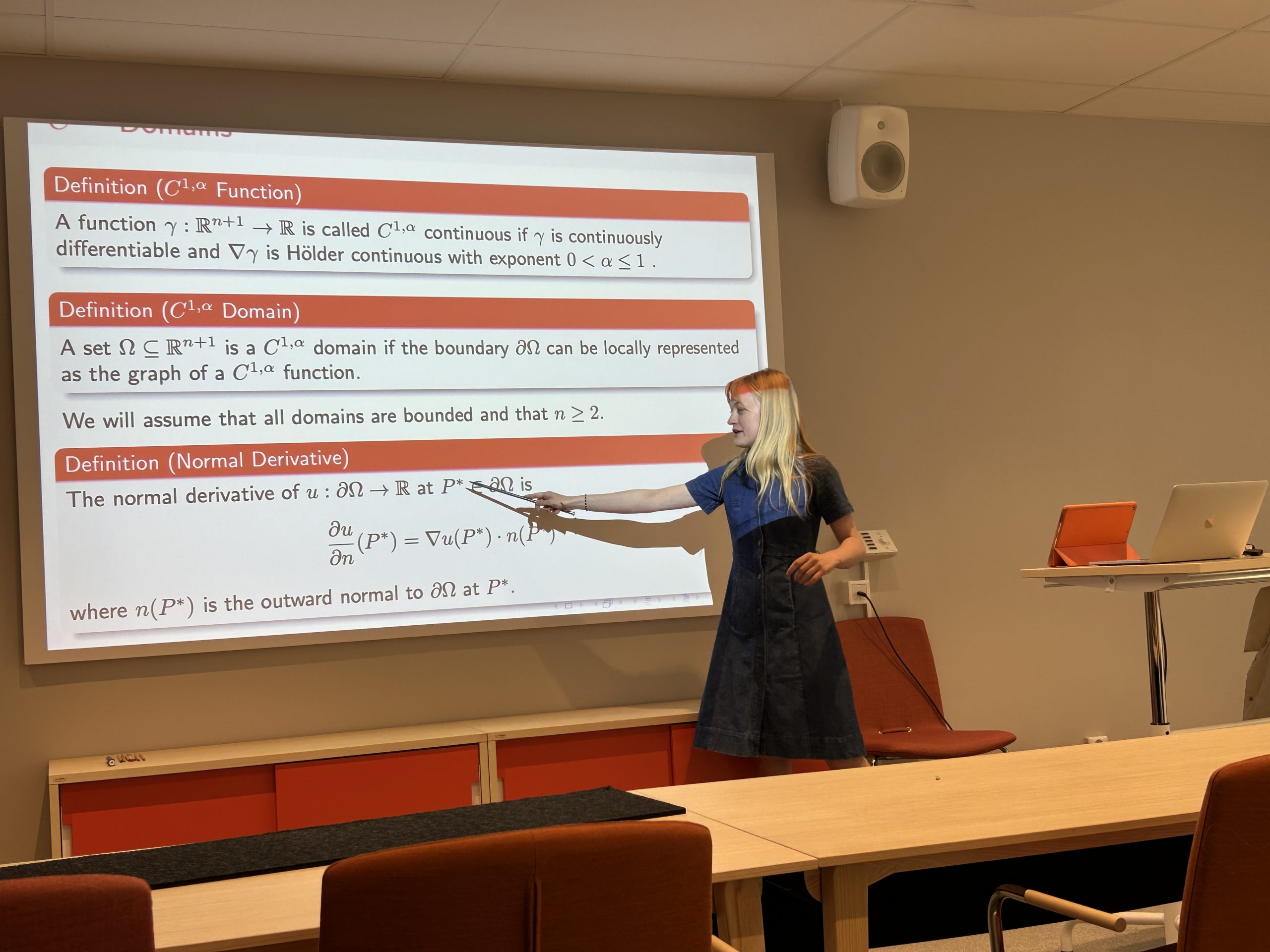
Living in Sweden, Anya completed her master’s program in mathematics in a joint program at the Royal Institute of Technology (KTH) and Stockholm University. She had a Spanish supervisor and a Russian “opponent” for the successful defense of her thesis, entitled “Solvability of Dirichlet and Neumann Boundary Value Problems on C1, αDomains.” We celebrated with Chinese hotpot! Anya continued through the fall as a teaching assistant at KTH and taking Swedish language courses.
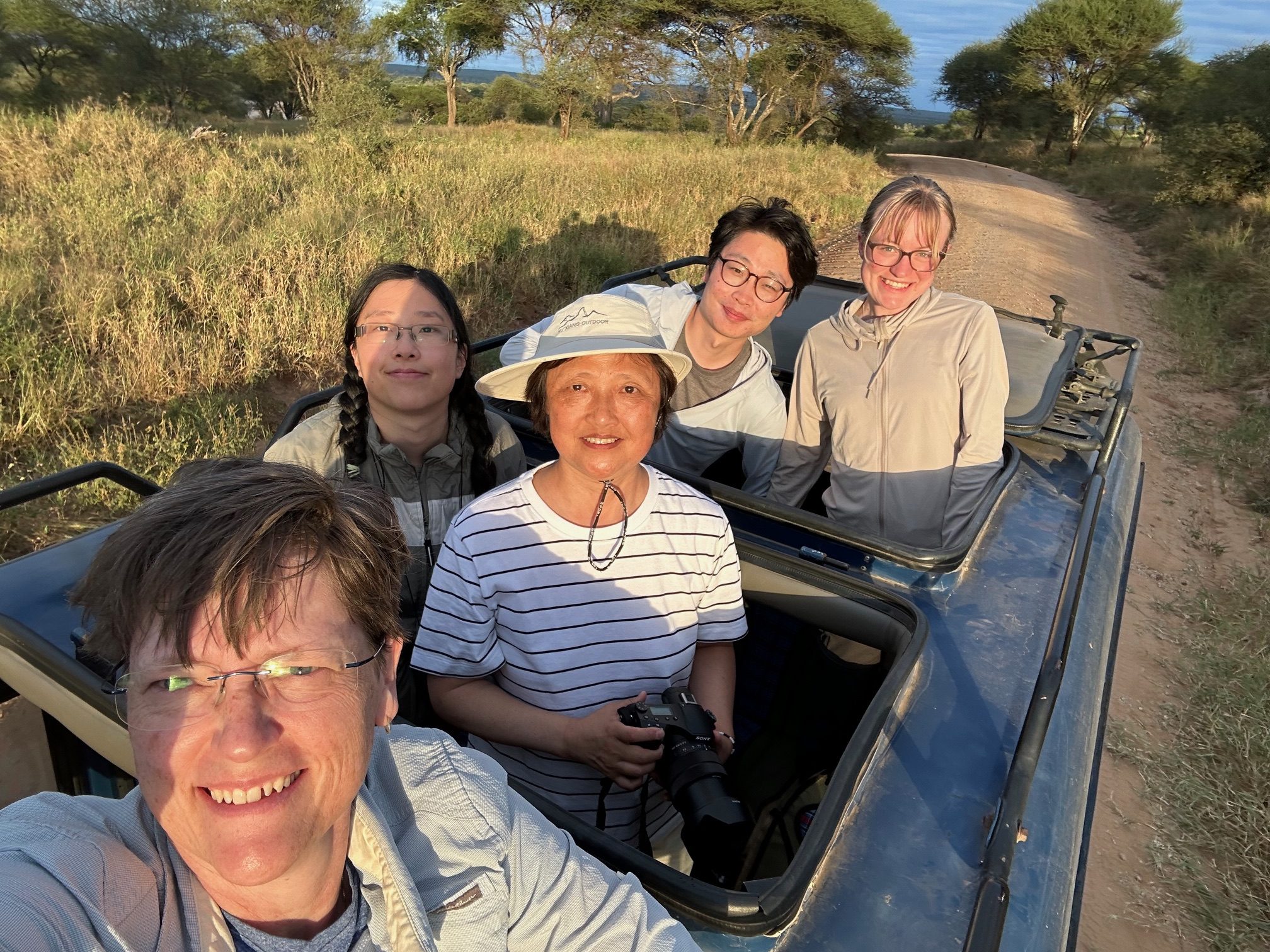
To celebrate her master’s degree (a bit early), I invited Anya to come to Tanzania as I wrapped up my two-years of the mobility phase of my postdoctoral fellowship (see MamaAnya.com). I invited Hemming, her Swedish boyfriend, and his family who live in the same area, to come with her to Tanzania. Hemming’s mother and sister joined us for two weeks of visiting friends and former places where we lived, as well as a bit of safari and visit to the coast for sand and snorkeling.
My two years in Tanzania for facilitating a collaborative creation care project for the Maasai were fruitful and rewarding. I’m grateful for the opportunity to work with a wonderful group of collaborators. It is a gift to be part of something that has a sense of God’s blessings bringing everything together. This last year is dissemination, where I’m finishing up projects and writing a book about it to share an adaptable model that leverages the underutilized church in response to the climate change crisis.
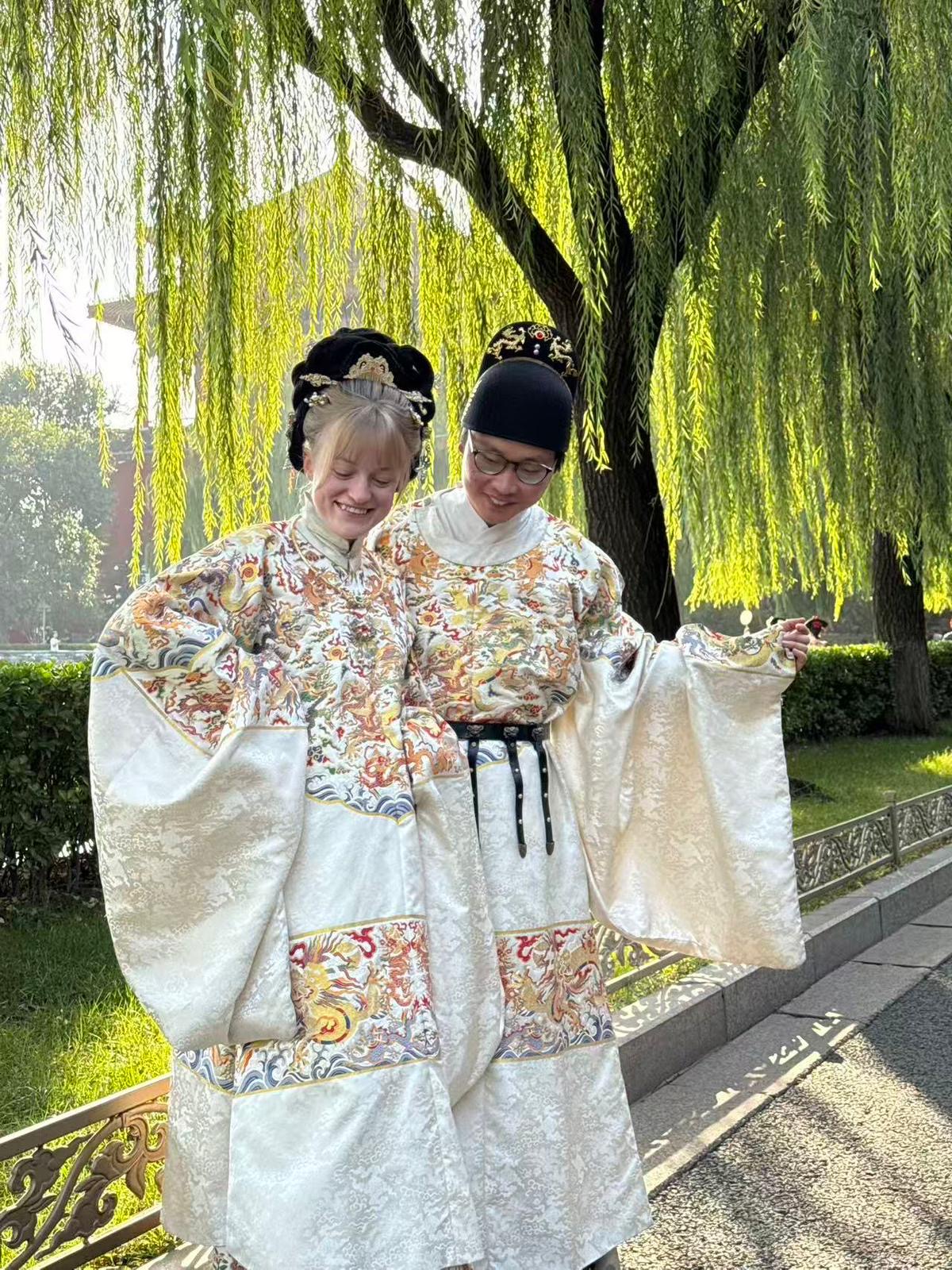
Anya was able to visit China in October with Hemming and his parents, to visit his grandparents and other family members in Beijing and Shanghai. Anya totally loved it.
This year, I’m based in Uppsala, Sweden, but I will take the train to Norway for conferences, seminars, and meetings. I also was able to represent Wartburg Theological Seminary (where I will return in the fall to again teach Old Testament) for 12 days of consultation on theological education and a Jubilee anniversary of the Evangelical Lutheran Church in Southern Africa. I shared in jubilant, joy-filled worship and heartbreaking, tear-filled stories of apartheid, including the death of the father of my host family while the father was in police custody in 1969—when my host was only 11 years old—leaving his mother a widow of eight children.
Finding his father’s name on the Wall of Names at Freedom Park, Pretoria.
This last account illustrates that for some the Other is not one who invites us to live our sacred calling to love one anOther, as Jesus loved us. In the midst of the upheaval in the world, may you be enriched by the special gifts of the Other, as Jesus was honored by the gifts of the Others from the East.
On Saturday, about 250 people gathered for a choir competition as part of my postdoctoral research project. These are cherished community events which I leveraged for a way to work on dissemination of creation care messaging in this Maasai context. As on 3 May, a choir competition is a way to gather ad hoc choirs comprised of students who participated in the creation care lessons. Yet, this event was larger than the first one (see the 2025.05.03 post) with 3 research sites comprised of 2 Lutheran secondary schools, which are boarding schools in Monduli (boarding because there are so few secondary schools in the rural areas), and 1 confirmation class from a local rural village (see the 2025.03.15 Showers of Blessing post).
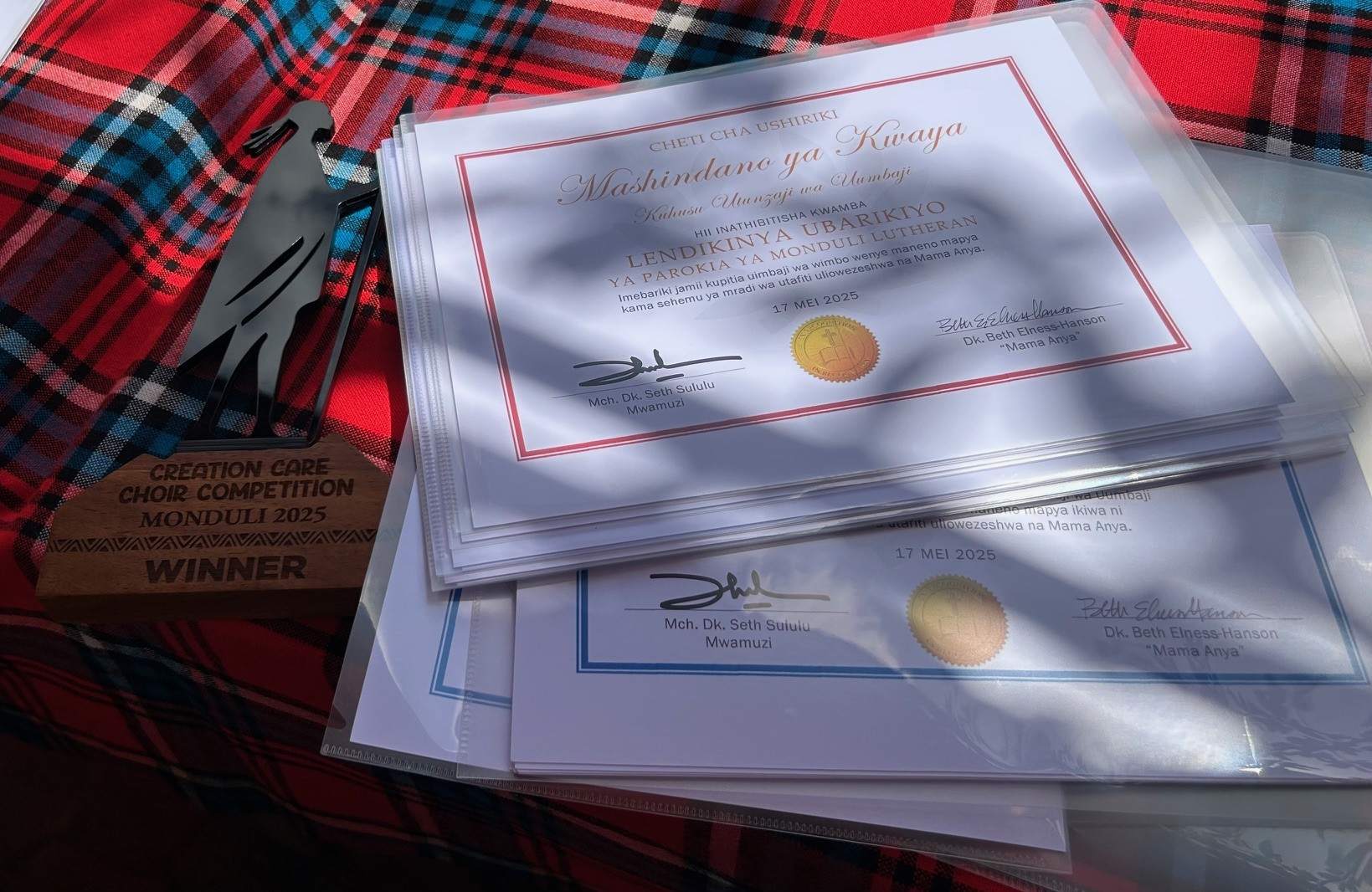
The Maasai trophy and certificates ready for distribution.
It was a celebration in several ways! First, a celebration of our Creator, as we all sang “How Great Thou Art” in Kiswahili (originally a Swedish hymn!). It was also a celebration of the learning through the creation care lessons, as the choir competition criteria was to take a traditional Maasai tune and write lyrics based on the main points of the lessons:
God has commissioned humans to care for God’s good creation.
The Maasai traditional environmental knowledge is good because it: a) contributes to creation care and 2) aligns with biblical principles of creation care (where God calls us to be stewards of the Earth [Lesson 1]).
Climate change is impacting the Maasai community’s traditional way of life, but integrating climate science with cultural and environmental knowledge [Lesson 2] can support mitigation and adaptation for sustainable living.
We have hope, because God has promised to never abandon the creation, and all of us doing a little can add up to a big difference.
There were 7 choirs who prepared songs. The winners were selected by the adjudicator, Rev. Dr. Sululu, the leading expert on Maasai music! The lyrics were in Maa, so the tri-lingual Sululu was the one to evaluate the content, as I can only track a few words in Maa. There were two choirs from Moringe Sokoine Secondary School who really did a great job of integrating the lessons. The winner will join the 3 May winner and come in 2 weeks to the Cultural Arts Center located on the Tumaini University Campus and professionally record the song. The students will receive copies of their song.
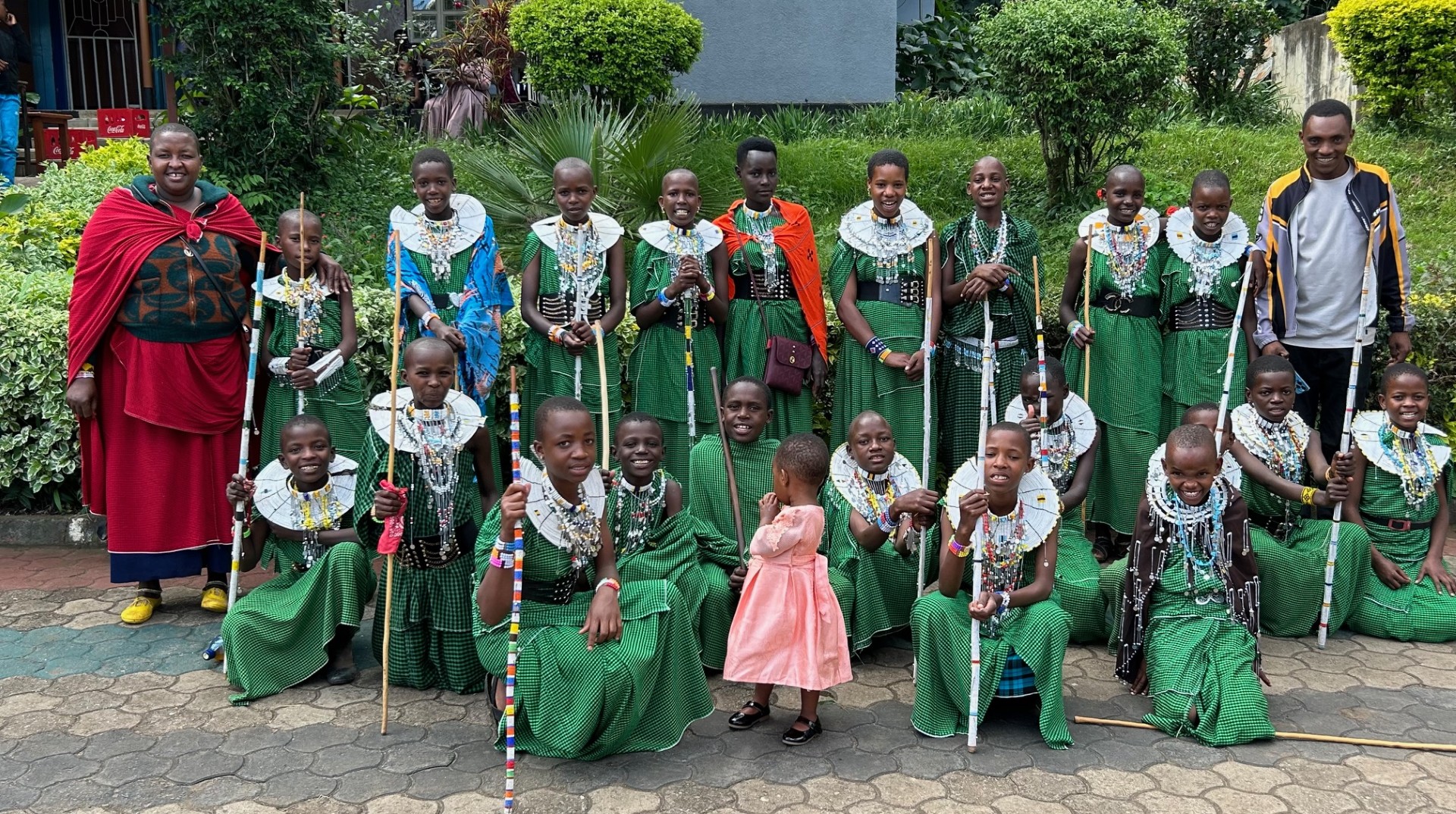
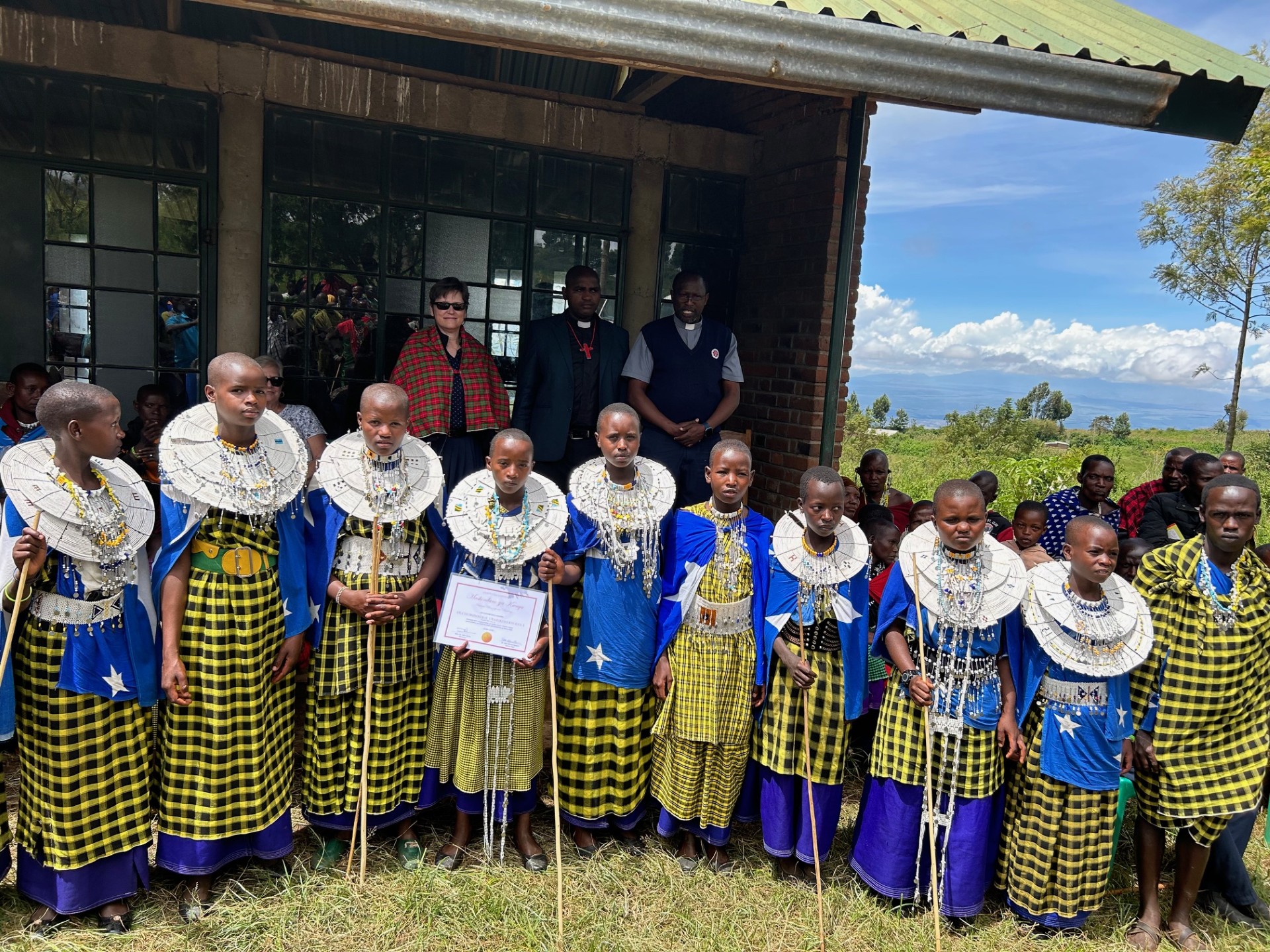
Though not the winner, my favorite presentation was the upper primary school confirmation students. They did a great job and used a very traditional Maasai tune. Sululu described them as “vibrant!” Indeed!
The Lendikinya Confirmation Choir
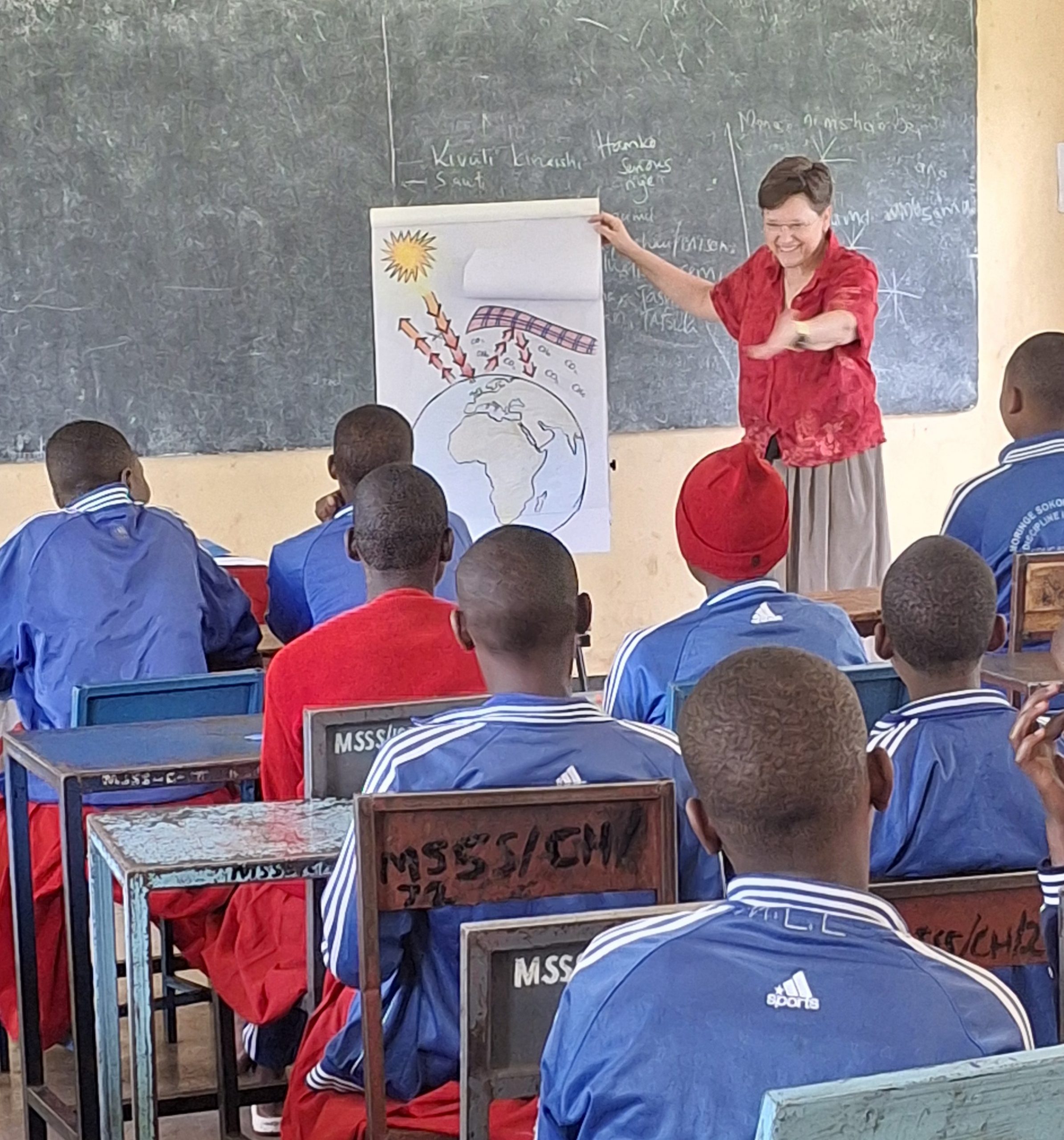
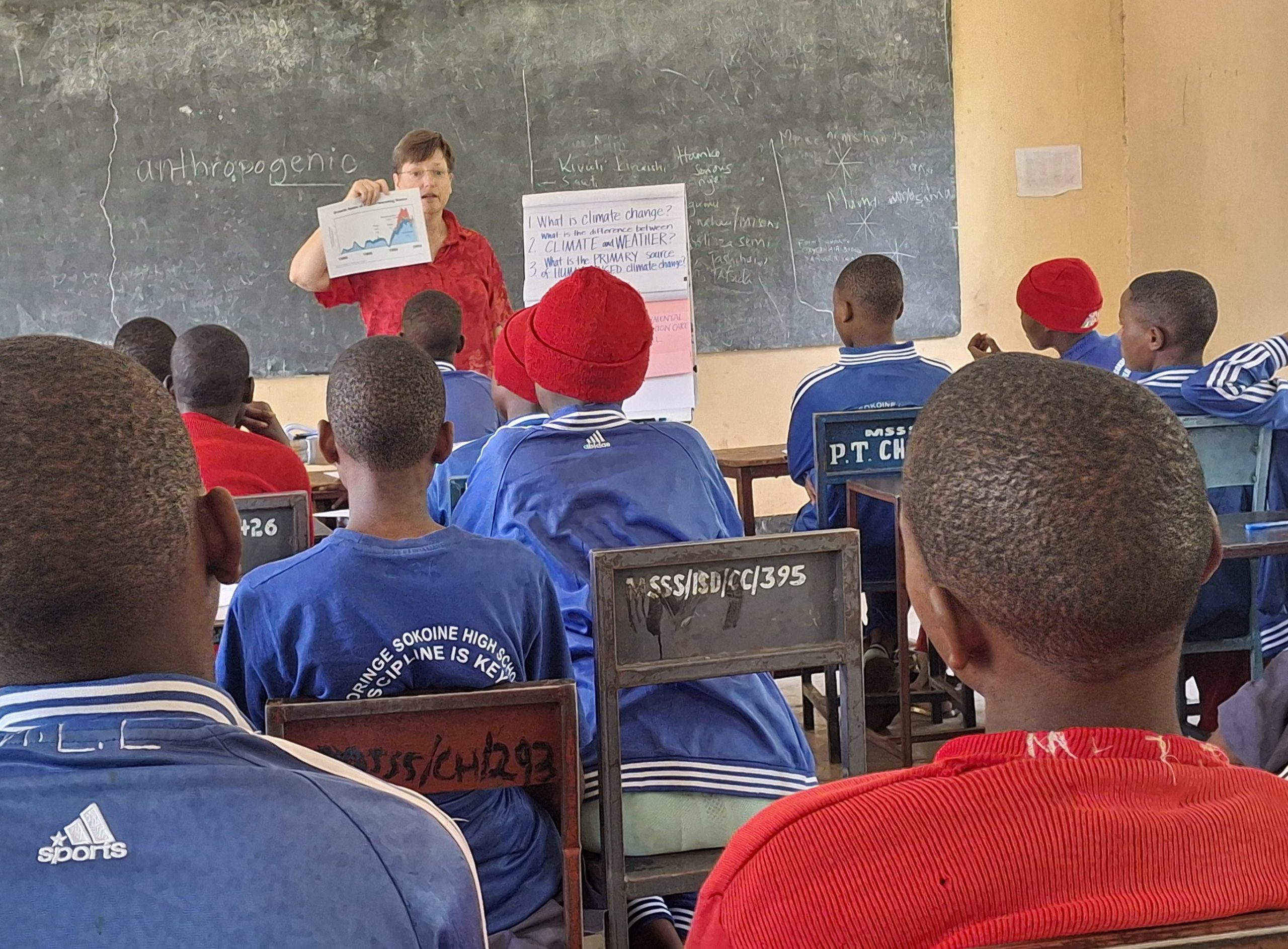
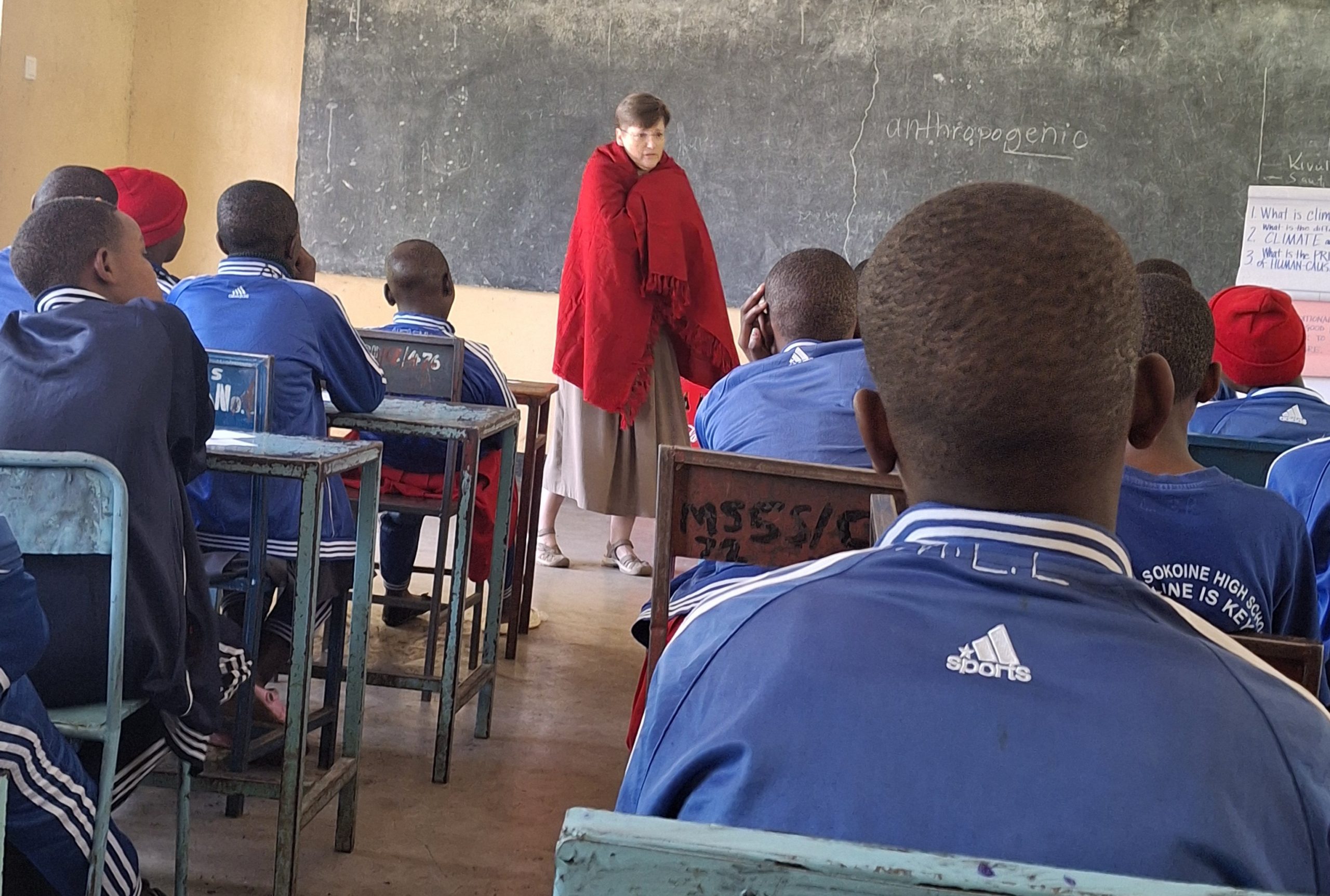
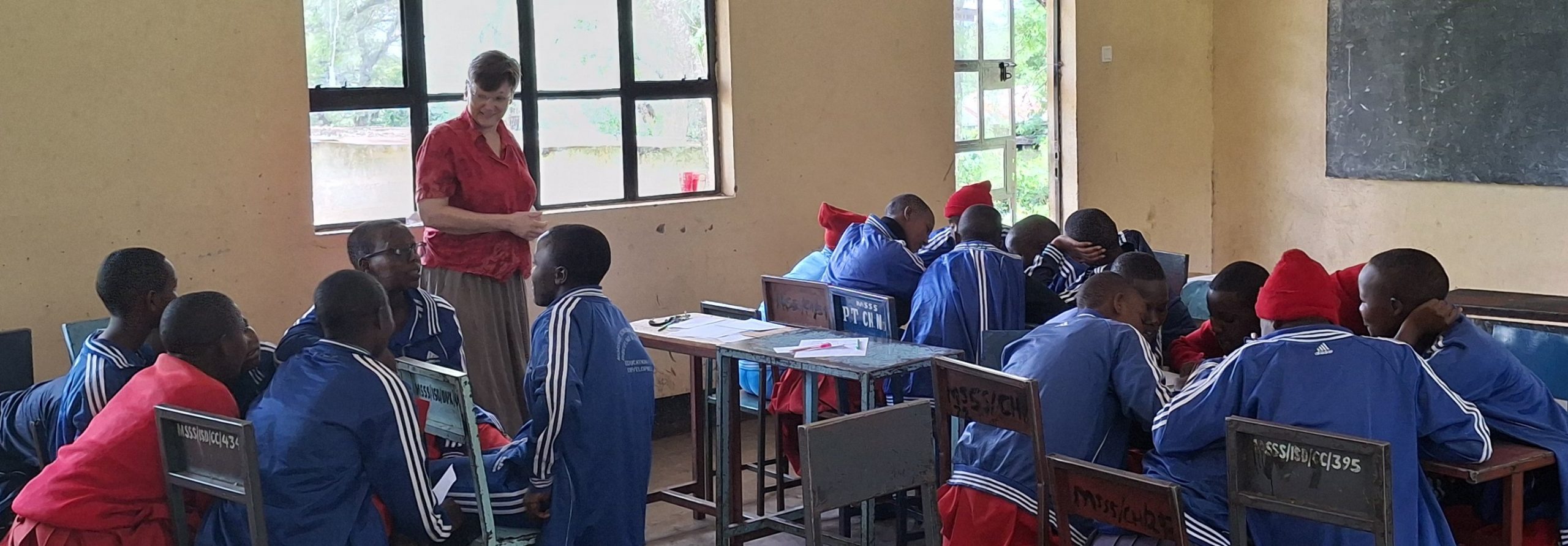
I was the teacher for the Moringe students (see the 2025.04.26 post). As I had seen all the other 4 teachers give lessons, I was able to edit the lessons to main points and streamline the content to fit in 45 minutes. Thus, I had 15 minutes for the application time, during which the small groups started to write lyrics on that lesson. Each lesson had time to focus on the main point (which was posted on the flip chart) and formulate it into their own words for developing a verse. This is not only good review, but it is so Maasai to sing!
In January 2021, when I started to develop this project proposal and had the idea of the using the local song contest model, I never imagined that it was a really good way to pull so much of this project together, reinforce learning, gather the communities to hear the core messages, as well as build bridges to further dissemination of creation care in the Maasai context.
Key parts were that my host, Rev. Megiroo (who had written and taught the confirmation lessons), invited key people:
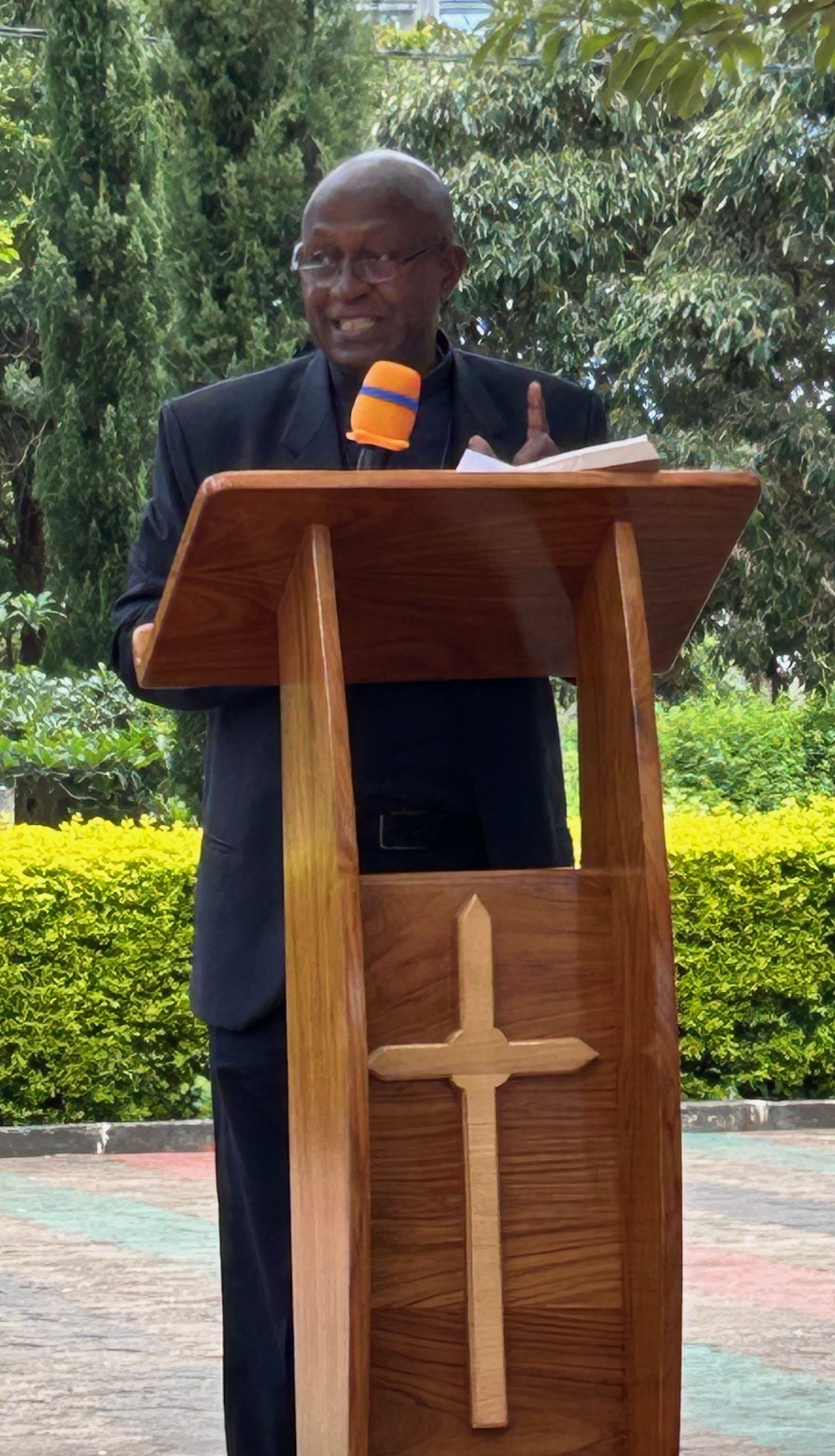
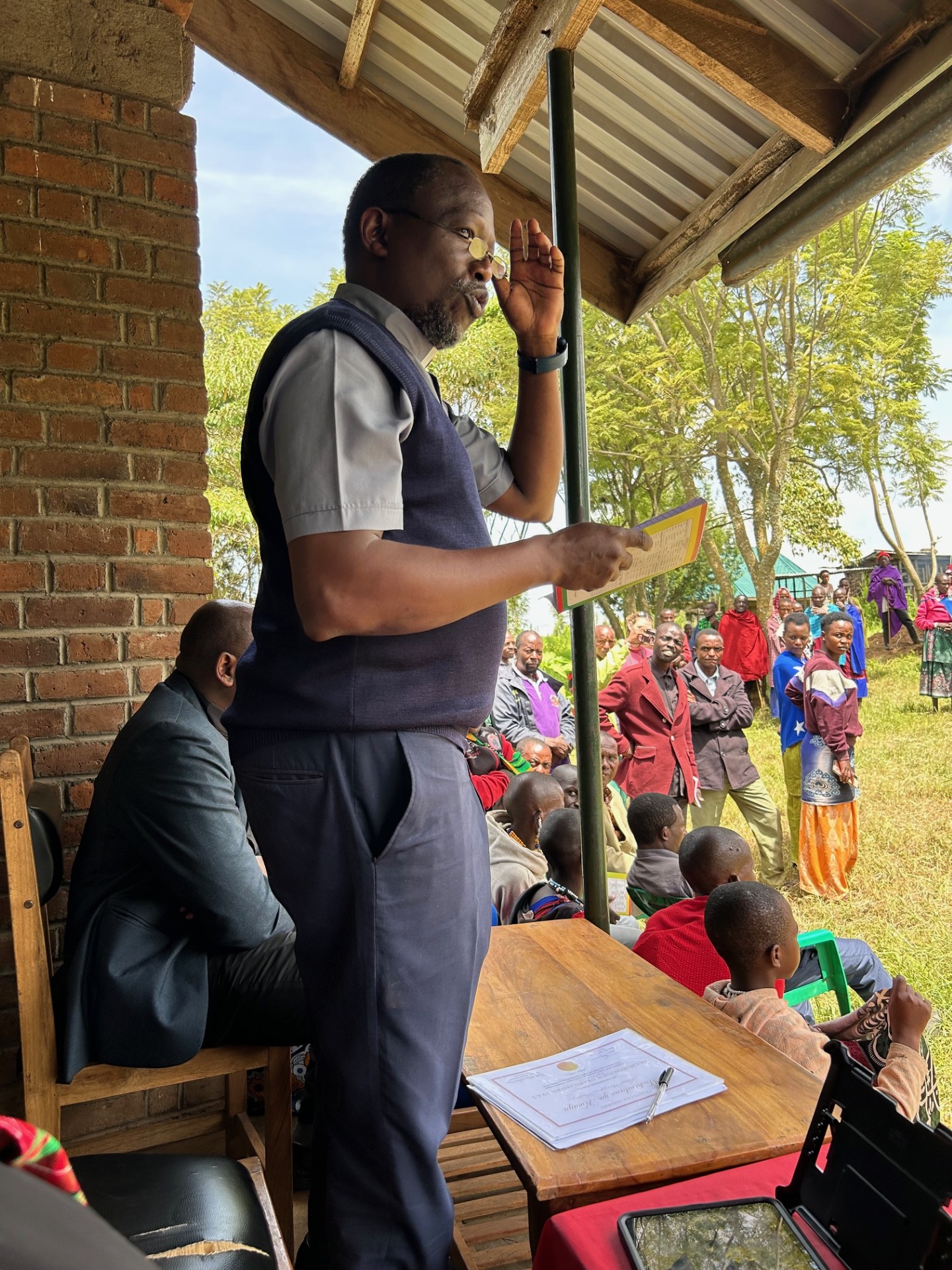
The local Roman Catholic priest was invited to say a few words. This became a homily, with many references to Pope Francis’s, Encyclical Letter Laudato Si’ of the Holy Father Francis on Care for Our Common Home. I had met this priest when the Wartburg students came, so we were able to strengthen our connection, which included further conversation during lunch afterwards.
There were three people who came from the District Commissioner’s Office. I need to get the formal title of the person who gave a nice integration of both faith and science in land management. His title is something like district conservationist or natural resources officer. How great that they were able to see the students work on creation care/environmental ethics for climate change mitigation and adaptation.
The District Pastor of the Lutheran Church was also present. I had not met him before, but with the introductions of my long-term friend and former pastor when I taught at the MaaSae Girls School, Rev. Nangole, I was known to him. It was good to finally meet and talk over lunch with him.
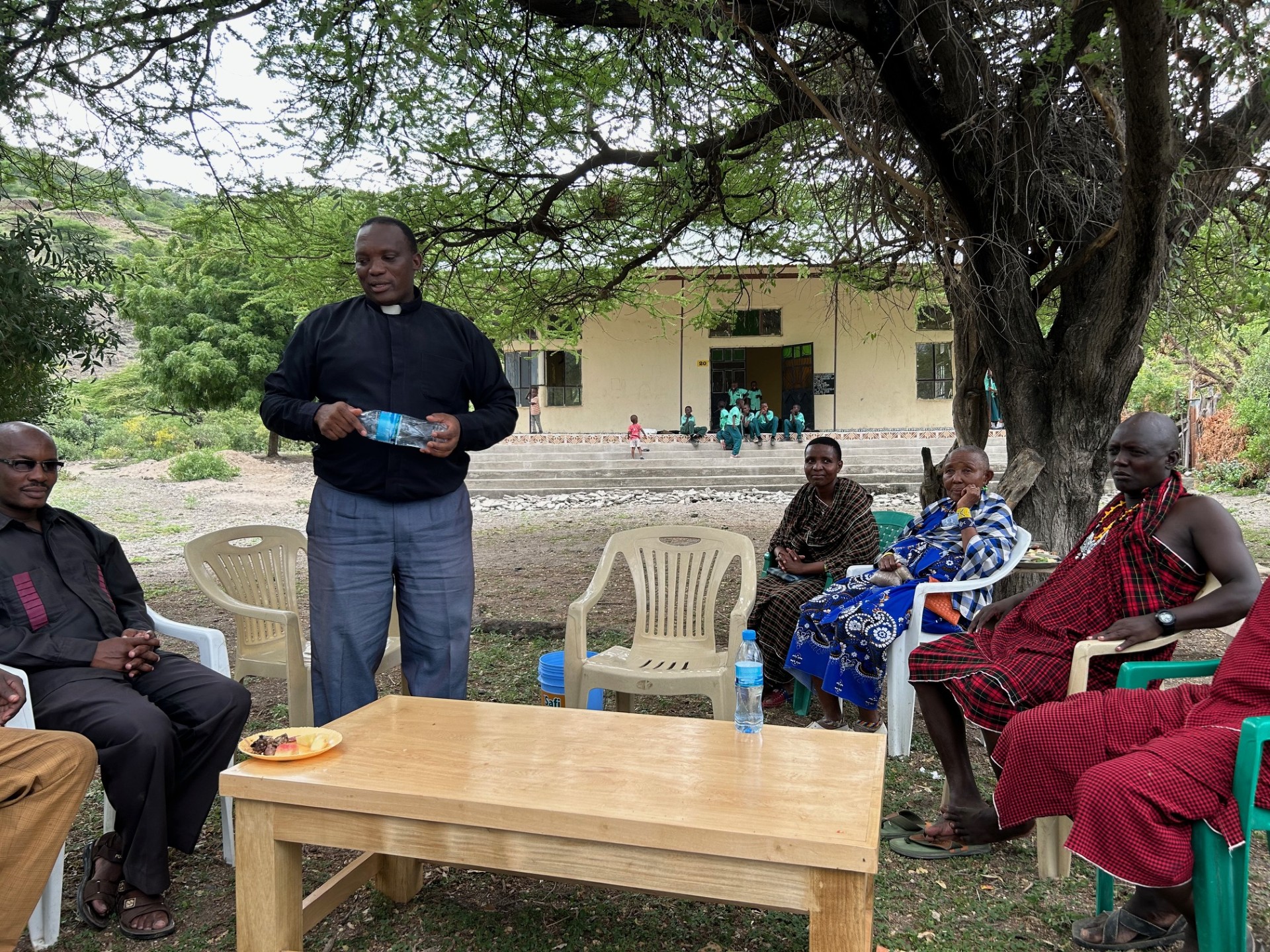
We also had some guest church choirs. At the end, while we were waiting for the caterer to have the food ready, the Maasai choir from a local village was singing and dancing. Father John got up and joined the choir and doing the dance moves. So, Sululu looked at Pastor Megiroo and said, let’s go too! I joined them and danced with the choir. I love that Lutherans and Catholics dance in Maasailand! Follow the link to the dance moves! https://youtube.com/shorts/hkLGKZ1w5co
Father John gives a homily on creation care.
It was a lovely day, and thanks to two trusted and gifted colleagues—Sululu and Megiroo, who managed the flow of the event—everything went well with a joyous celebration!
Final weird note: Recently, I woke up realizing that the hymn “How Great Thou Art” was going through my head, but the chorus started in Swedish and ended in Kiswahili!
Mikitamayana Engai! / Mungu akubariki! / God bless you!
I usually start each fieldwork visit with a bit of a reality check. I’m effective in planning, managing the details, communicating to the collaborators, and yet, this is Africa (TIA)! There are so many ways things could go sideways or even flop. So, undergirded with prayer, and I start the day with a letting go to the journey of the day.
Last Saturday, I was at the base of Mount Ketumbeine, a 3,000 meter (around 9,800 feet) dormant volcano in the Great Rift Valley. (Anya and I hiked to the top and camped at the top of the mountain in 2016 with our missionary colleagues and daughter who is just a bit younger than Anya.) I had recruited my friend, Laurie (a former missionary who has moved back and retired in TZ) to drive us the 3 hours to the base of the mountain, where we stayed at a lovely little guest house with good food and gracious service. I know the owner a bit now after about 4 visits.
Saturday morning, I read Psalm 90, which ends with v. 17 “May the favor of the Lord our God rest on us; / establish the work of our hands for us— / yes, establish the work of our hands.” Then, I let go of the expectations that all the planning would go smoothly.
After breakfast (when I ran into the son of the former pastor of my late husband’s home church!), we—along with 5 cases of sodas in glass bottles (no plastic for an environmental project!)—are picked up in a rented Land Cruiser to be able to get up a bad mountain road. In our group is my esteemed colleague, Rev. Dr. Sululu, who will adjudicate the choir competition today. Sululu is a good friend who I have known since 2013, and I have gotten to know better as I supported him in his final phase of his PhD, and he is my neighbor at TUMA. Now, he is the world’s foremost authority on Maasai music—and is a Maasai originally from Ketumbeine. So, Sululu stayed with his mother (who I met on one fieldwork project with the women’s cooperative).
Today, my research project is sponsoring a choir competition. These are actually big community events! The focus is dissemination of creation care messaging through song in a culturally affirming way.
On 8 Feb., the first research site visit occurred in this Maasai village half-way up the mountain, when the Maasai pastor taught the 3 confirmation student lessons that he wrote in a 1-day workshop. Since then, the students have been developing lyrics to sing to a traditional Maasai tune. The 3 verses relate to the three lessons: 1) biblical creation care; 2) traditional environmental knowledge; and 3) climate science appropriate for Maasai pastoralists.
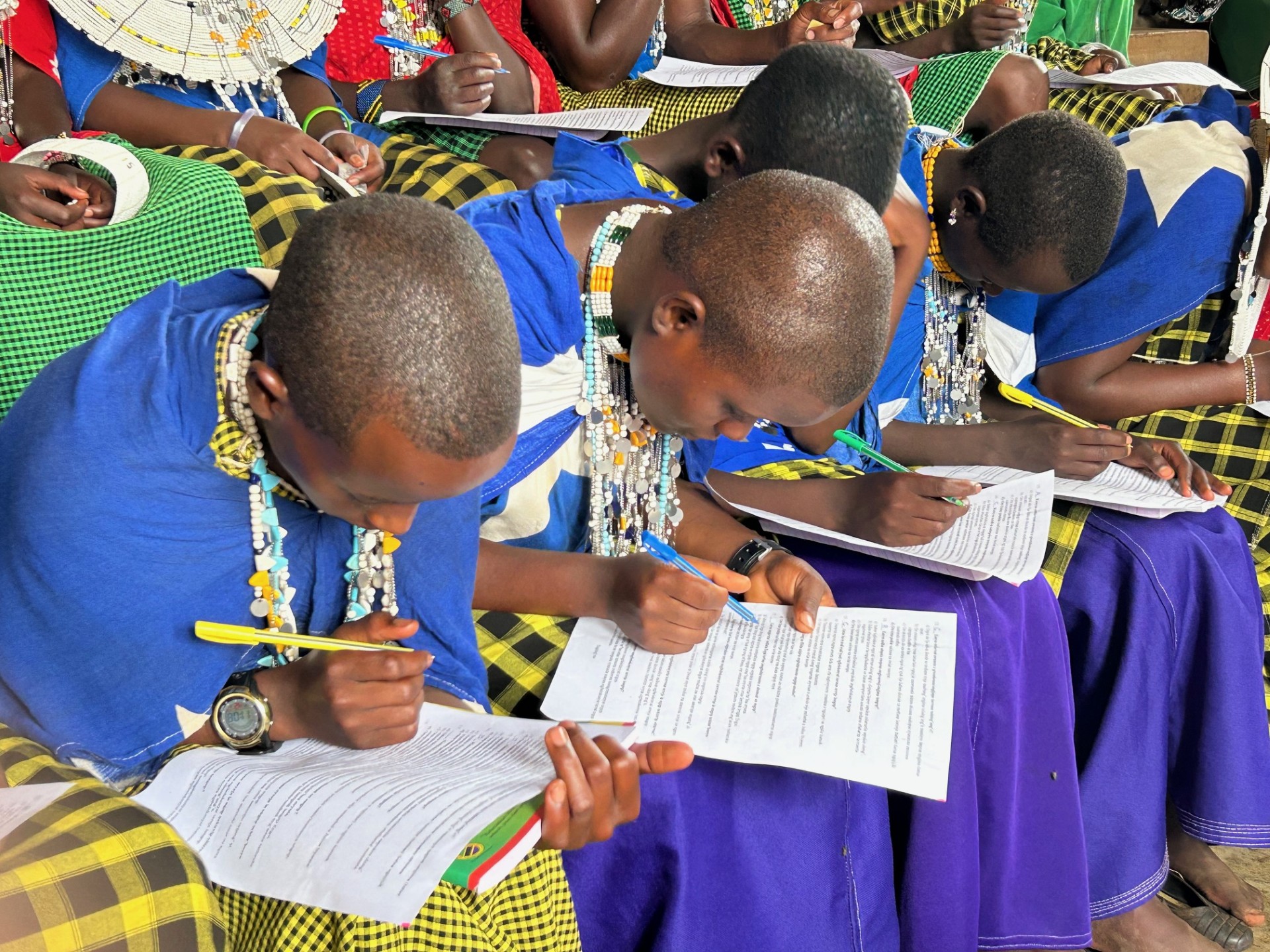
We started with a longitudinal follow-up survey for the research aspect of this project.
The follow-up survey
Then, we had the choir competition with 3 choirs with students from upper-elementary levels.
Wow! They really worked hard. I wish they could all win! Fortunately, I didn’t have to make the decision! Sululu is an expert at this, and he knows Kiswahili and Maa languages.
Sululu gives feedback to all the choirs and announces the winner
The lay pastor, Raphael, really is a gifted leader, and he brings joy to the events he has led. He will bring the winning choir to TUMA, where there will be a professional recording session in 4 weeks. Each student will receive a digital copy of the song, and it will be available online, while the local parish will be the owner of the song lyrics. This is a great way to get the messaging out beyond the local community.
As I was reviewing the day with Sululu, he said, “This was beyond my expectations!” Children’s choirs are sung by children with limited experience. However, it was obvious that this caught their imagination, and that they put in significant effort. It was a joyous day. This was one of the amazing days that are so rich in Africa!
Mikitamayana Engai! / Mungu akubariki! / God bless you!
It ends up that I got to teach the last lesson cycle in this fieldwork.
My project collaborator, a wonderful teacher at the MaaSae Girls Lutheran Secondary School (MGLSS), wrote the secondary school lessons. But he was moved by the government to southern Tanzania right after Easter. Then, the back-up teacher ended up hired for a several week German NGO consultancy. So, it would be more important to have a longer-term job than my Saturday gig. I told him that I give him my blessing to back out of the teaching, as this project is meant to be a blessing, and it would not be a blessing if he was not able to take this work opportunity. The other 2 teachers (also collaborative writers of lessons for this research project) had prior obligations. Providentially, it is an English-medium secondary school. I’m actually glad to have had a chance to teach the lessons. I’ve been working on the lesson content as a conversation partner with the Maasai collaborative writers with editing, formatting, gathering feedback from the Stakeholders who reviewed the draft lesson plans, then revisions with the writers’ changes, and next edition of formatting.
I was at the Moringe Sokoine Secondary School in Monduli. The head of school has been eager to host the research project. They are down the road just a couple of kilometers from MGLSS. Both are owned by the diocese, however Moringe does not have a Western-funded student sponsorship project like MGLSS does (so if you are interested in helping out an underdog school, let me know).
I had almost 30 Maasai girls for three lessons. While the project was designed for Form 2 (and 8th grade equivalent), the head of school asked to include other Maasai students, as his school has less than MGLSS. We agreed on Form 3, but then he said, “Why not have Form 1 too?” It was better for me to say, “Yes.” The good news was that we had a nice group of students, and the challenge is that most Form 1 students are about 4 months into their English language learning. However, I had several opportunities for small group discussion, where those who were tracking better could help those with less English competence, I had my main handout in the first lesson in 3 languages: English, Kiswahili, and Maa, I had prepared flipchart pictures to illustrate what we were talking about, and I used some key vocabulary in Kiswahili to help anchor key content.
At the beginning, they were to tell a conversation partner a one-minute story of the most beautiful place they had ever been and how they felt. Then, they switched speakers in their pair. I started with Form 1, “Any Form 1 students want to share their story.” No volunteers. None also for Form 2, but a Form 3 student was glad to tell her story. After she broke the ice (an idiom that does not work in Tanzania), then others from the younger students were willing to share a story.
This is the “hook” for the lesson, as I continue: “We have shared and heard some stories of the amazing beauty of God’s creation. Our Creator God made an amazing and beautiful world! The Bible tells us that God has given us humans the responsibility to care for God’s creation. Let’s look together at some important texts in the Bible. (Queue first handout with instructions, Bible verse, and 3 questions.) There are 4 Bible texts, and groups of 4 students had 10 minutes to discuss the text, answer the 3 questions, and choose a reporter. It took some coaching and help from me, but we got through our 4 verses (Gen 1:31; Gen 2:15; Ps 24:1–2; John 3:16) and our 3 questions.
What does this Bible verse say about God?
Example: God is the Creator. God loves the world.
What does this Bible verse say about God’s creation?
Example: God created the world good. The earth belongs to the LORD.
What does this Bible verse say about the relationship between humans and God’s creation?
Example: God put people into the world and instructed them to take care of it.
The first lesson went fine, though, in general, most students were a bit shy. By the third lesson, I had a good rapport with the students. When I was leaving, one of the students said, “We love you Mama Anya.”
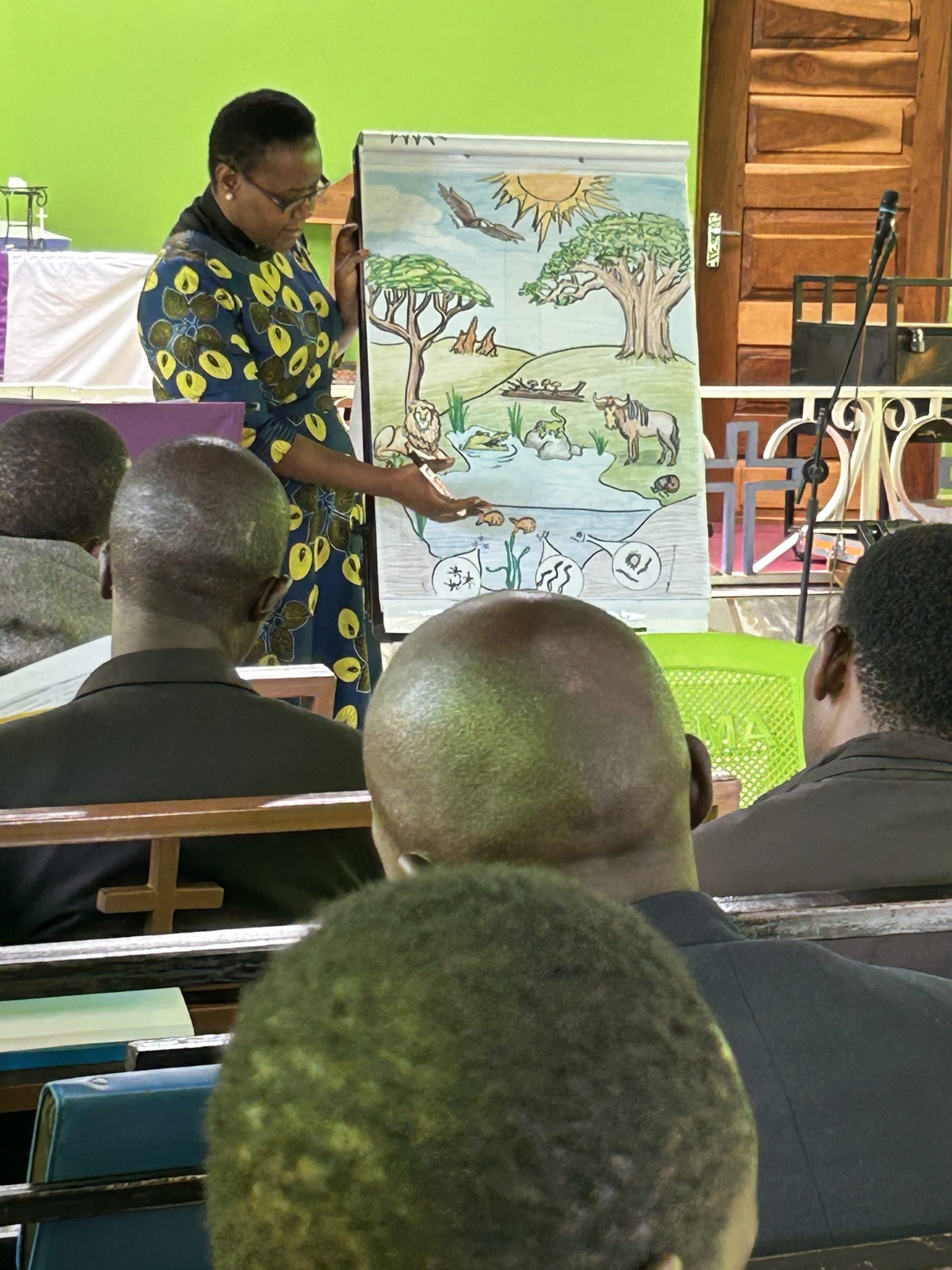
There are three lessons: 1) biblical creation care; 2) Maasai traditional environmental knowledge and the correlation with the biblical “creation triangle” (Shalom comes from a right relationship with God, humans, and non-human creation); 3) climate science applied to a Maasai context. Each of the lessons ends with hope!
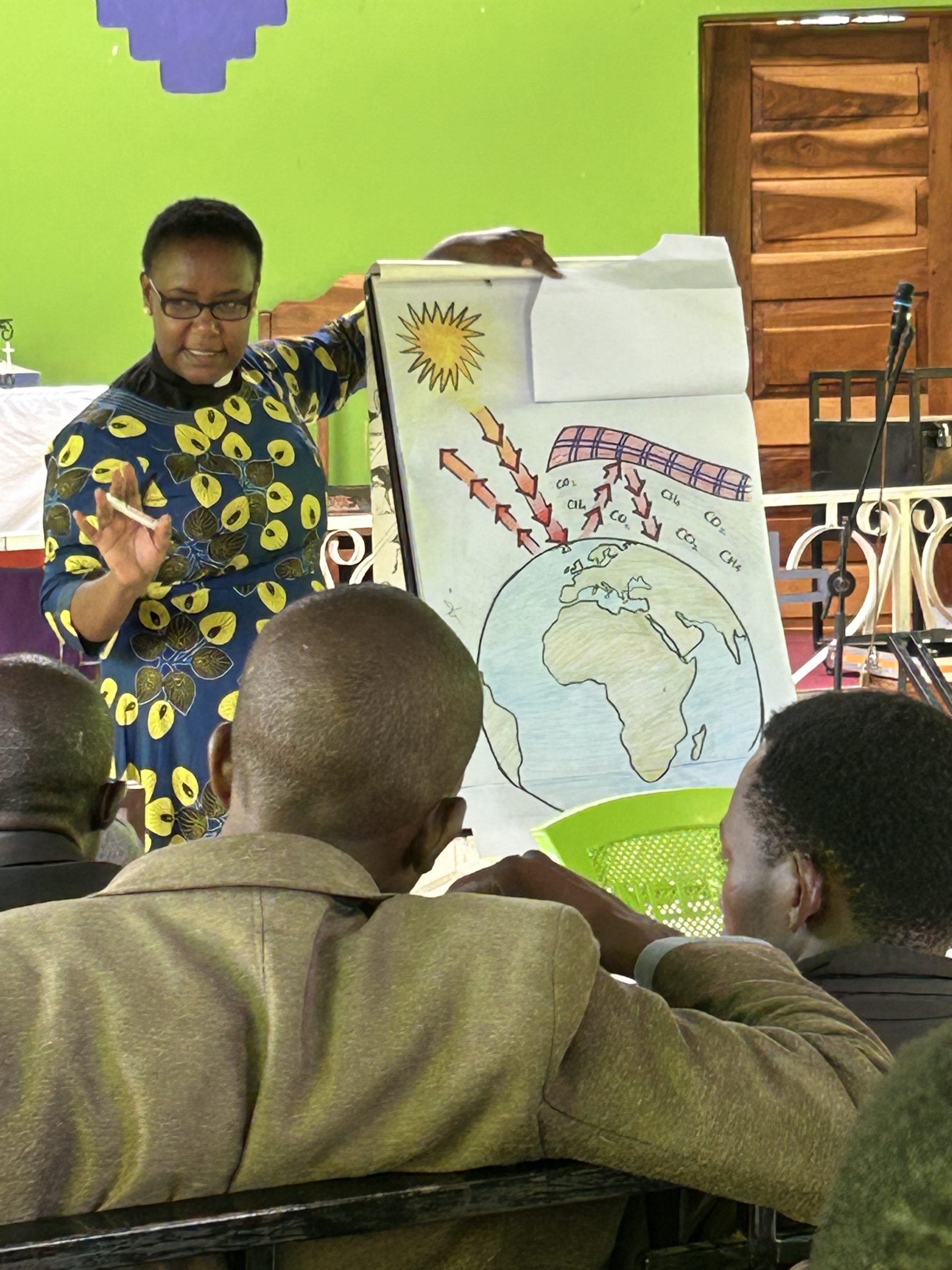
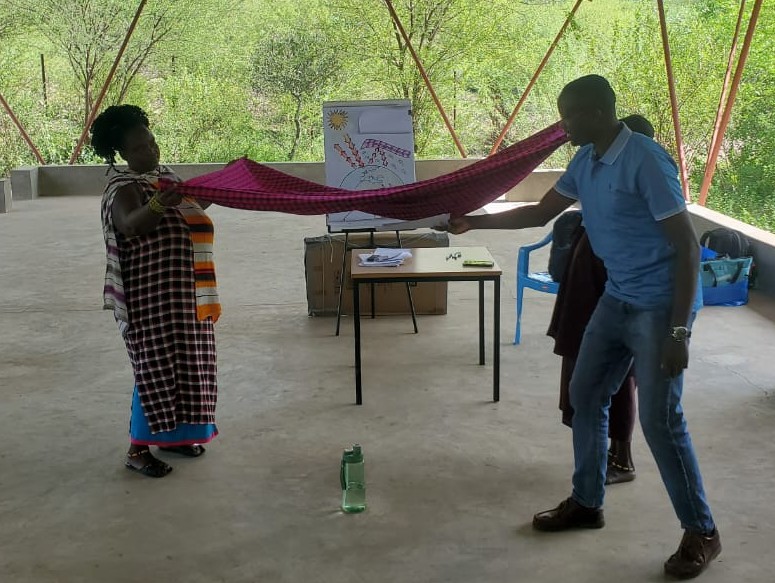
I benefited from watching 4 Maasai teachers teach these lessons in 7 previous fieldwork visits. One inculturation was not using “greenhouse effect” and “greenhouse gases” for people who have never seen a greenhouse! So we used the “blanket effect” and “plant-warming gases.” Yes, bring a Maasai blanket for illustration!
I was able to learn things from them and streamline the lessons to better fit the 60-minute time frame. Most of the lessons tried to cover more information than the time would allow. I told them that later, they could adapt the lessons to more occurrences or longer time frames, but for the research, we needed to have 3 lessons in one workshop, so that I had a better chance of gathering clean data. If the confirmation student lessons were taught over 3 weeks, there would be inconsistent participation and little chance of enough students having attended all 3 lessons for good survey data.
So, what a joy for me to be able to teach the lessons and connect with the students in such a meaningful way and with such important content! Oh, I love teaching Maasai girls!
Mikitamayana Engai! / Mungu akubariki! / God bless you!
This June, I will be back in Uppsala, Sweden. I have arranged to return for the International Society of Biblical Literature conference (ISBL), where I will present a paper “Ground of Being and Center of Hope: Reading Psalm 37 with the Maasai.” How wonderful to have it in a place where I will live again for this next year.
For the paper, I wanted to interview a pastor who was working in a contested area quite a distance from my location here at Tumaini University Makumira. Yet, through a friend, I found out that he had recently moved to a church just 20 kilometers away. My friend made the introduction, and I was able to interview the pastor and learn about how the pastoral staff help the church community respond with peaceful resistance, with prayer, and with hope because of a profound trust in a God who fights on behalf of those suffering from injustice. There is amazing resonance between Psalm 37 and the Christian Maasai context!
How Providential to have this important connection so close to my current location!
Mikitamayana Engai! / Mungu akubariki! / God bless you!
I had the honor of being invited to preach at the Arusha Community Church for Easter. I’ve preached there about half a dozen times before, including when I was here 20 years ago.
Somehow, preaching for Easter Sunday is a heightened responsibility at the highest celebration of Christianity. At first, I wasn’t going to say I could preach that Sunday, but then I realized that I would let the worship leaders decide, and I was asked to preach on Easter. Truly, an honor.
The Arusha Community Church is a multicultural, multidenominational, lay led congregation. There is no pastor on a very small staff of an office manager and some kitchen staff/cleaners. It is amazing in many ways with people from all over the world worshiping in English who are united in our Triune God with Jesus as Lord and Savior.
I’m encouraged that I did open up to the Easter preaching invitation and have the opportunity to articulate the centrality of the gospel through the death and resurrection of Jesus Christ. He is risen! He is risen indeed! Hallelujah!
Mikitamayana Engai! / Mungu akubariki! / God bless you!
Rev. Dr. Suzana Sitayo does a wonderful job teaching the lessons. She wrote the lessons, and this is the third time she has taught them.
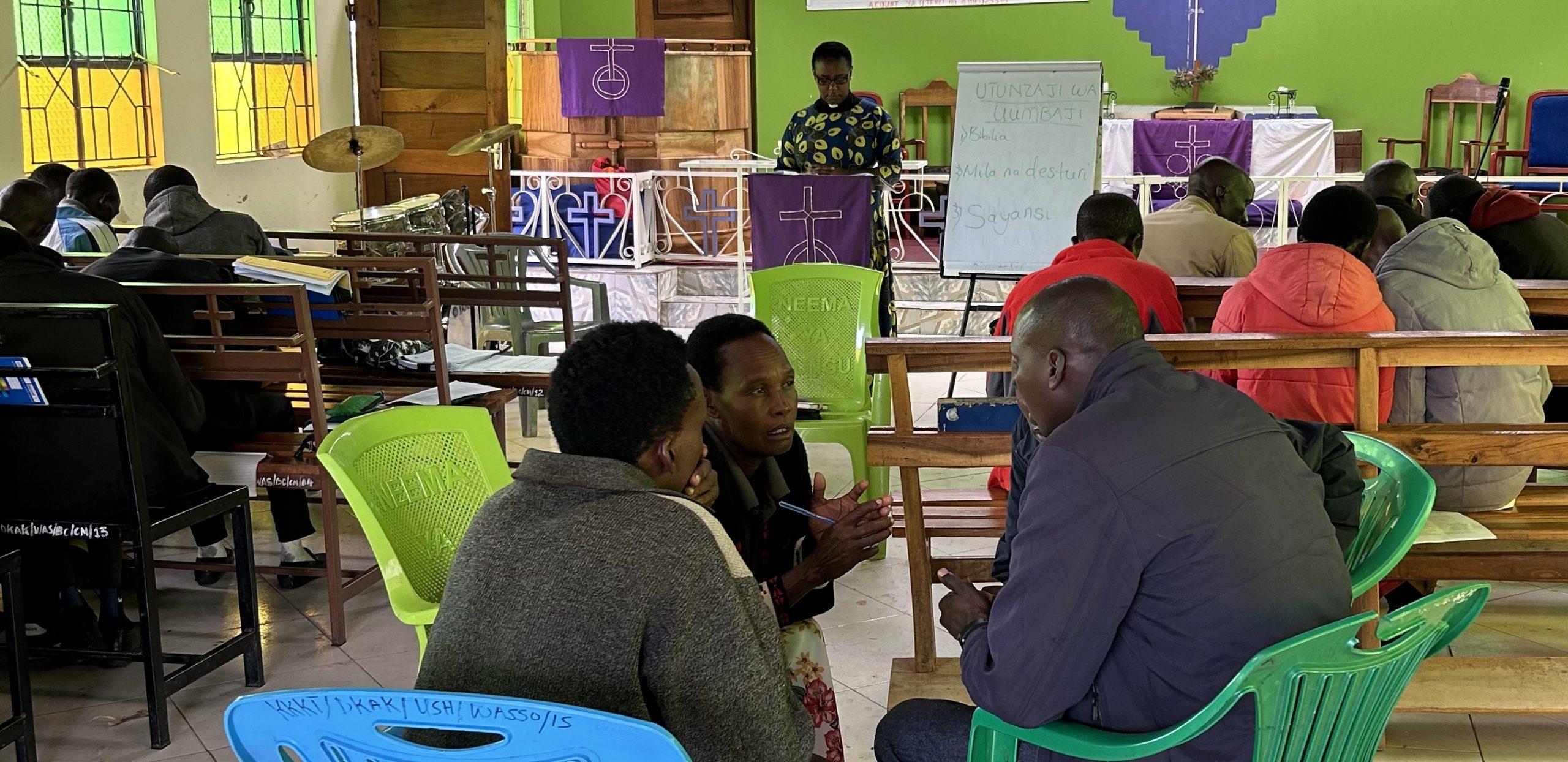
The lay pastors in training are actively engaged, diligent in their note taking, and sit for most of the day on uncomfortable slatted bottom pews. (I’ve learned to bring a camping sitting pad along or grab a plastic chair!)
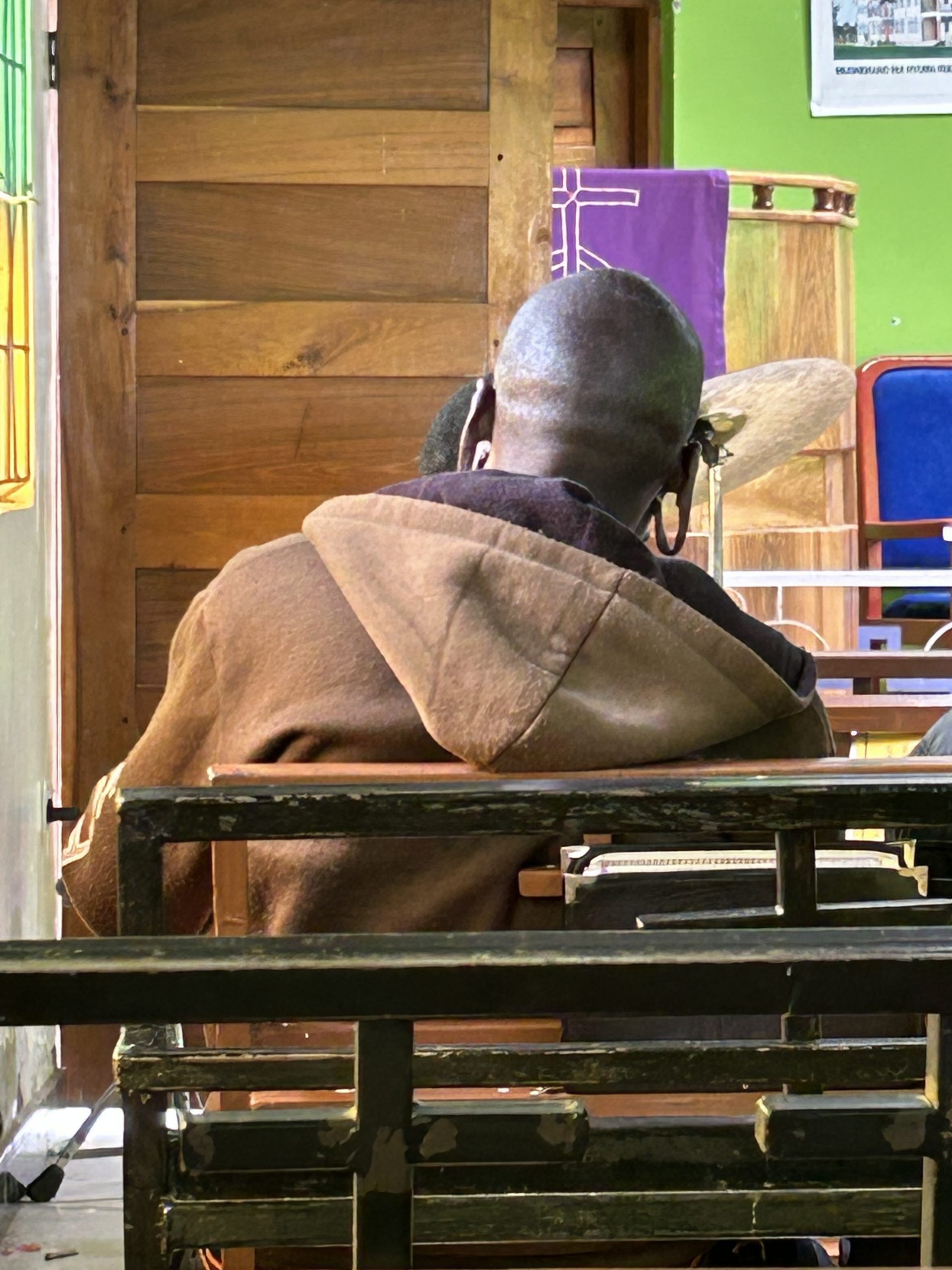
This was a very Maasai context (note the traditional Maasai earlobes below). There are even two sons of the local traditional Maasai shaman in the group, who in the lessons affirmed the power of the Holy Spirit as the only power for good.
This is another area where the government has been recategorizing the traditional Maasai grazing lands to be conservation areas that end up as private hunting grounds for the royal family of Dubai. (See Gardner, Benjamin. Selling the Serengeti: The Cultural Politics of Safari Tourism. Athens, London: University of Georgia Press, 2016.)
So, I asked questions to the district pastor how he guides the local churches. We had a long conversation, but to summarize: First, we tell the people to be peaceful. Second, we pray. Prayer is our power. In addition, there are people who are raising up, especially lawyers, who are not selling out to privileged government positions meant to keep them quiet. So, we have hope because God hears our prayers.
While in Wasso, I heard from Suzana that one the older students has a daughter in her early 20s. A health issue resulted in not being able to conceive with her husband, so the husband’s family rejected her and sent her back to her father, but she remains stigmatized in her community. She was helping to teach confirmation with her father, which she was enjoying. So, he was wondering if there was an opportunity for her to be equipped to be a lay pastor. When I heard this, first, I was so moved at the depth of compassion of this father toward his daughter. In a patriarchal Maasai society, this is not so common. Then, I said to Suzana, the scholarship in my husband’s name is to support lay pastors’ children in their schooling. I will get her funded. Finally, I said to Suzana, that I appreciate her wisdom, as she makes it possible for me to be a better blessing. The needs are innumerable, so having Suzana’s wisdom to know how to strategically be a blessing is important. She understands the culture and circumstances in order to determine priorities.
Please also pray for Suzana, as just a couple days ago, her grandfather passed away.
Mikitamayana Engai! / Mungu akubariki! / God bless you!
I am grateful for Rev. Dr. Suzana Sitayo, the Principal of Oldonyosambu Theological College (OTC), the center for training lay pastors (called evangelists in the ELCT) through theological education by extension (TEE). Suzana has incorporated the lessons that were developed for the research project that I am facilitating. Suzana is the writer and teacher of the lessons for the TEE students.
In addition to coming to OTC a couple times per year, the TEE teachers go to areas within the large North Central Diocese for additional teaching in a more local area.
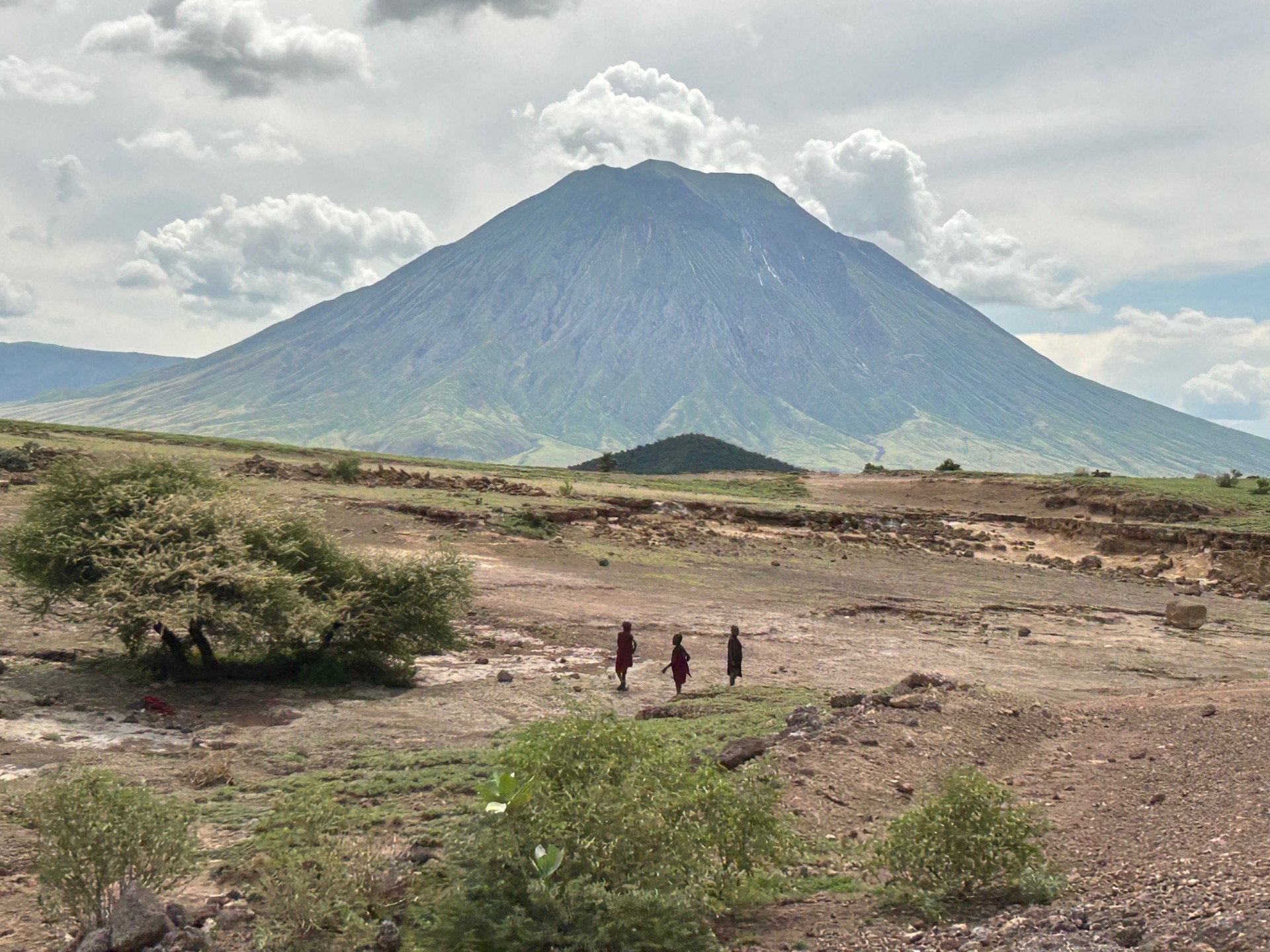
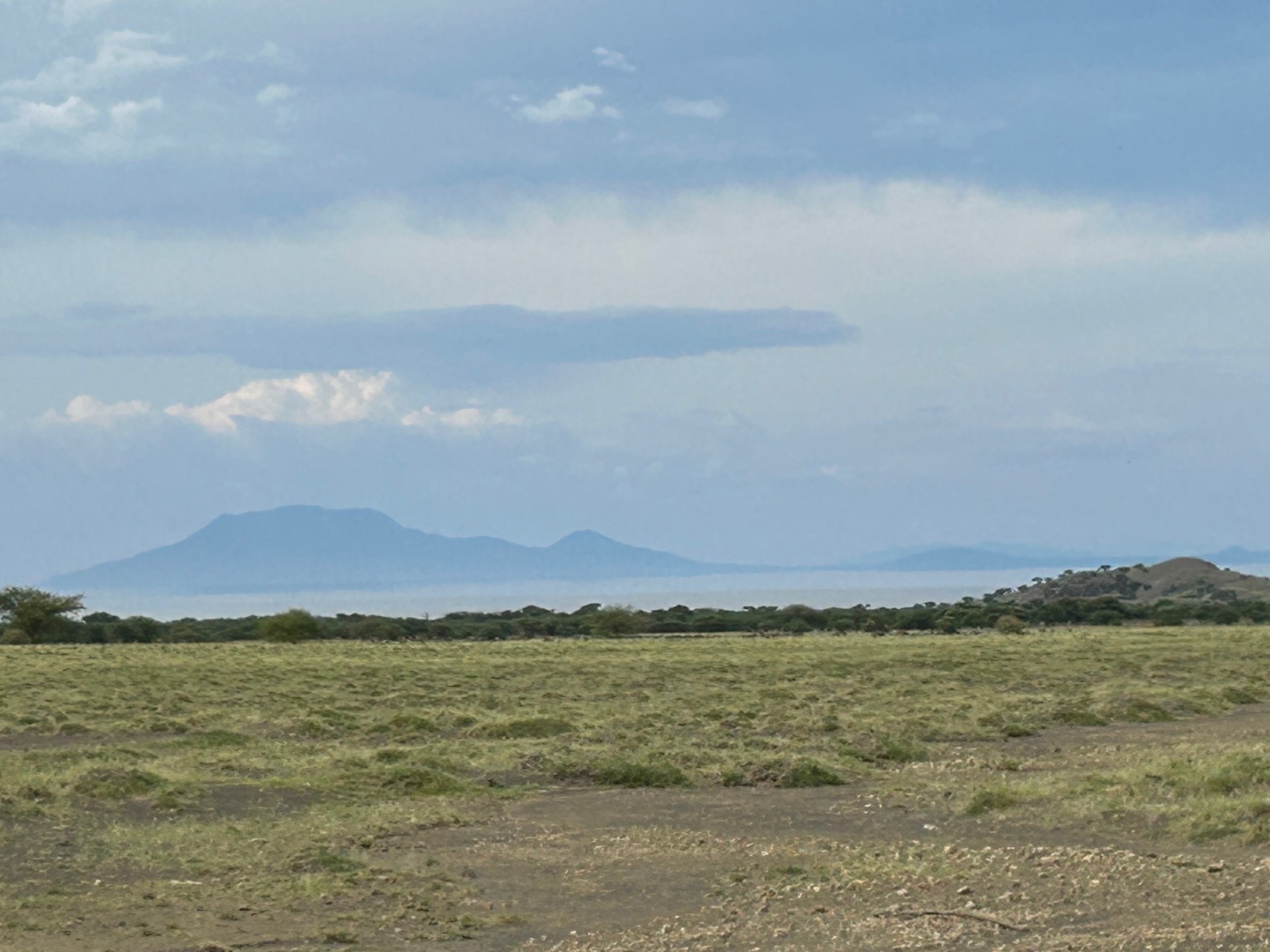
Previously, I was in Kibay, a 7-hour drive to the south for the TEE training. This time, I was in Wasso, a 7-hour drive to the north through the absolutely gorgeous area between Oldoinyo Lengai (the “Mountain of God” in the Maasai language) and Lake Natron, a soda lake complete with flamingos. It is a long, dusty, bumpy, and hot drive, but I loved it. I feel so privileged to be able to be here, invited by Maasai friends.
We brought along the district pastor, bringing him back home. But I realized that because I wasn’t a Tanzanian citizen, I would have to pay a daily fee to enter into a conservation area (revenue for hunting safaris). Several years ago, when I brought my home church group in partnership with Rev. Nangole, he arranged for a waiver for the entrance fees, as this was church business. So, we were not only able to avoid the fee for church business, we were able to provide a ride home for the district pastor who did the talking at the gate.
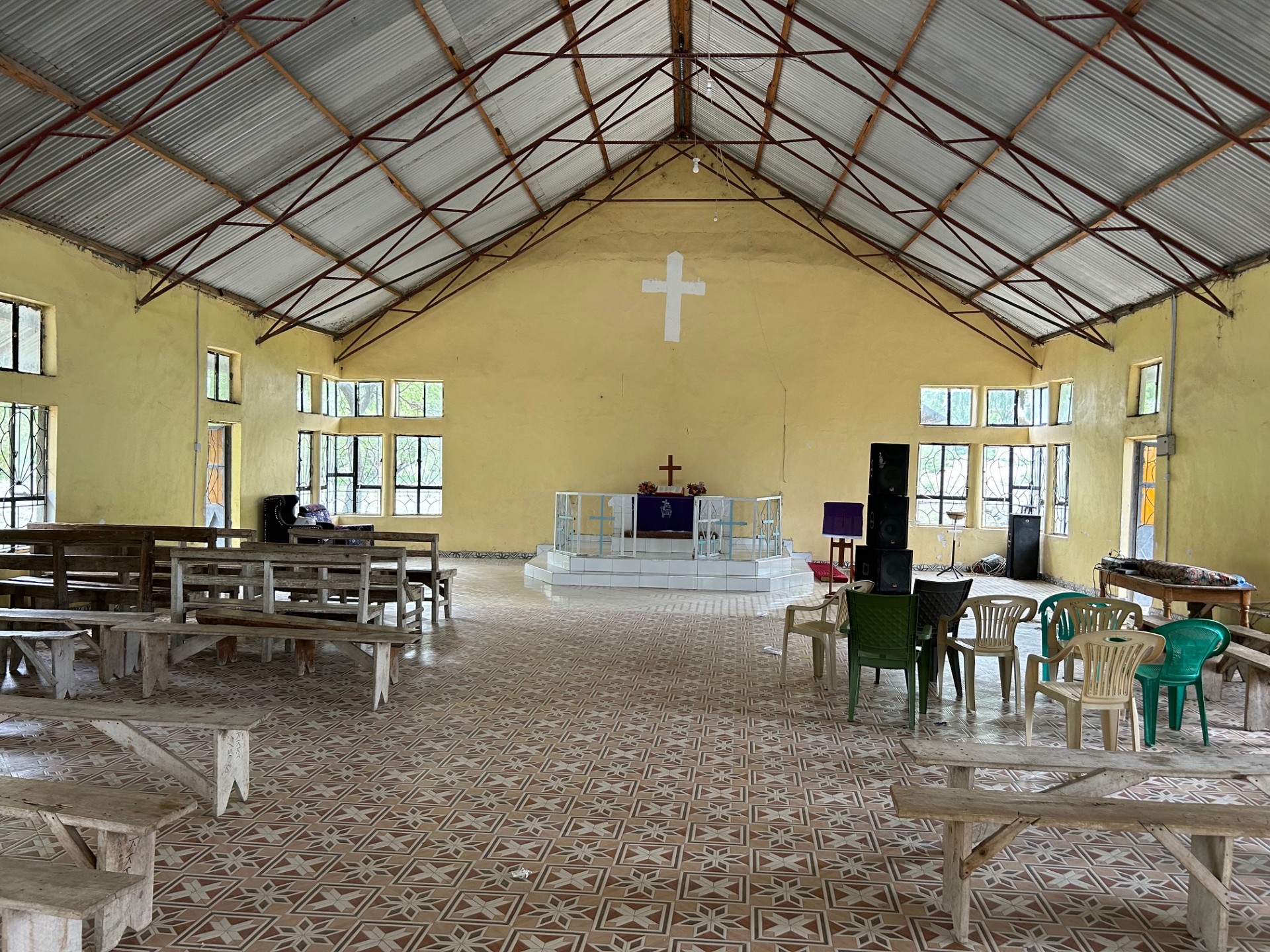
He also arranged for us to have lunch at a church along the way. It was the church at Engersero, at the base of Oldoinyo Lenga (a volcano—not dormant—not erupting; “The Weirdest Volcano in the Word”).
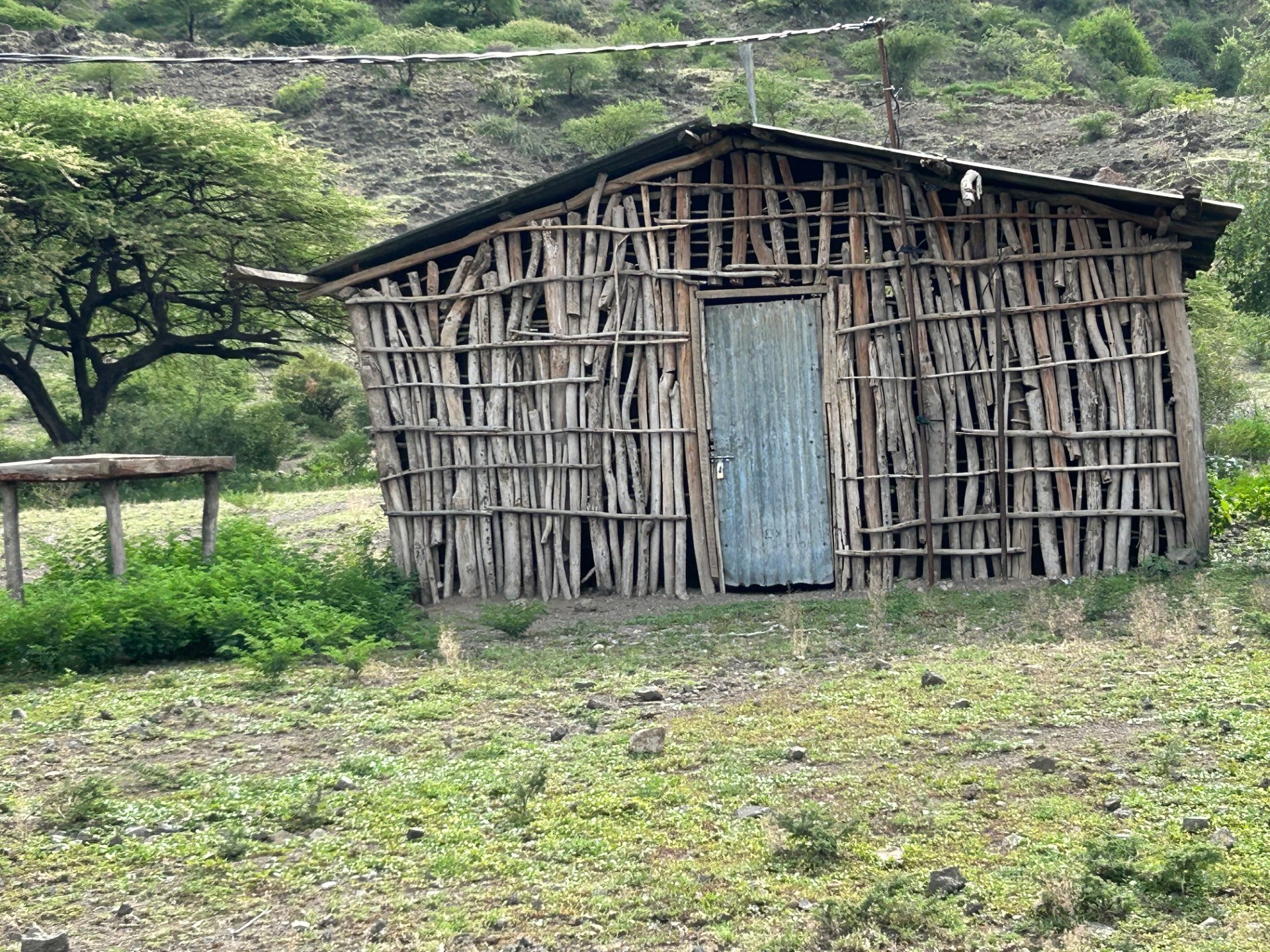
One of the most amazing days of my life was here in 2008, when we were welcomed with a parade of singing and dancing Maasai warriors and a church choir! My home church was helping them to build a building, as their stick and mud church was literally held up by a log holding up the tilting wall! Amazingly, it still is standing!
Now, there is a beautiful church.
I told them the story of being here in 2008 and 2016, and the wonderful memories of the amazing welcome that day. One of the young women in our 2008 group said it was the most amazing day of her life!
Pray for this community, as traditional grazing lands are at risk from government plans!
Mikitamayana Engai! / Mungu akubariki! / God bless you!
My research sites are predominantly in places where I am known and trusted, because relationships are vital. It is false to think that one can be a neutral unbiased researcher for many reasons (no one is neutral and hermeneutical philosopher, Hans-Georg Gadamer, say that our non-neutral interests motivate us to ask questions, but I won’t bore you with this right now). In addition, without a relationship, there would be a natural protective response by the research participants, especially when a white person (mzungu) comes and asks questions in a Western mode (a paper survey). Now there is another risk on the other side of the pendulum swing, that the research participants will subconsciously reply with information that they think I want to hear. So, each survey introduction has a statement to indicate that the best response—what I would like to know—is your perspective or opinion.
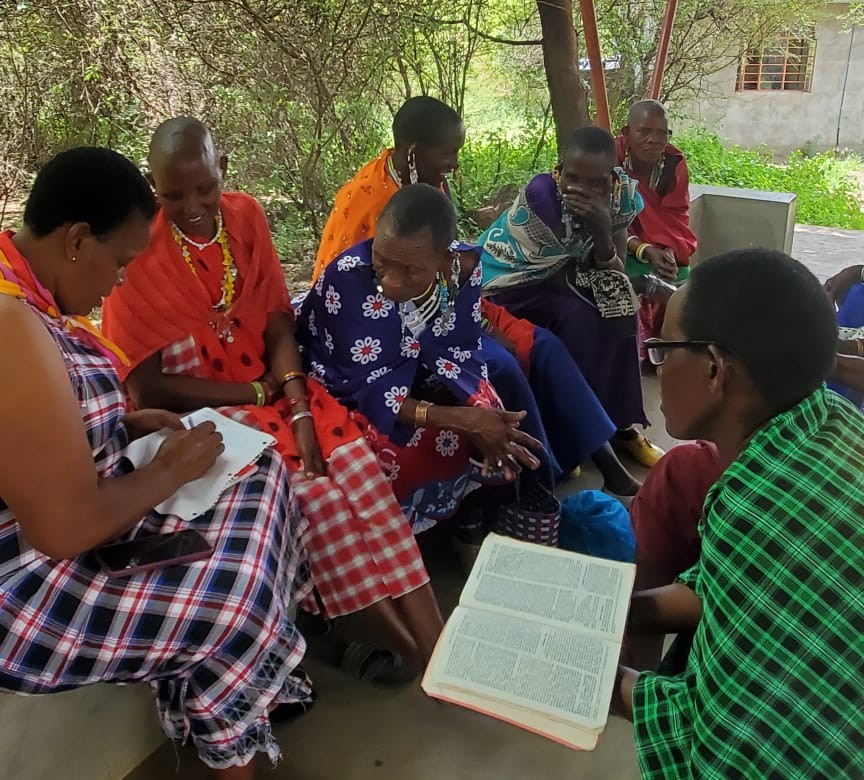
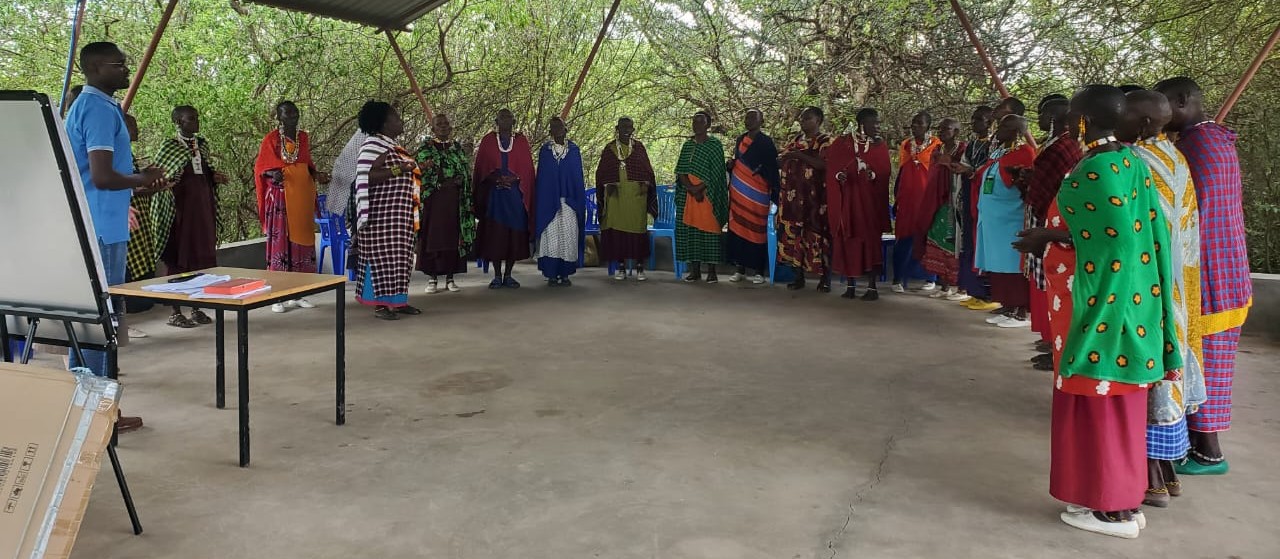
However, there is another challenge; paper surveys are very difficult for women who have never had the opportunity to go to school and do not read or write. Many researchers (and early anthropologists) would stick to getting information from those who are literate and speak the lingua franca of this country, Kiswahili, which means that until the last decade or two, the research participants would be men. However, I am committed to the struggle to find ways to include Maasai women’s voices. With the help of Bethany, the long-term ELCA missionary (who is the facilitator of the Naapok Women’s Cooperative), we figured out a plan for the pre-lesson survey that would be respectful and culturally sensitive. We could not do paper surveys for women who do not even sign their name with a pen, but rather, they make a thumb print. The plan Bethany and I developed was for one of my stakeholders, Julius, is from Ketumbeine (a referral from Bethany) would orally present the questions and discuss the question as a group. Their whole community and work as a cooperative is done as a group. Julius is trusted, as he helped the women develop their constitution. So, Julius went prior to the day of lessons and met with the Naapok women for 2 hours and then wrote up a report.
It sounds like there was some discussion about the terminology that was new to them. (Yes, I’ve worked with my stakeholders to develop climate science terminology that would be consistent for the 3 different writers in 2 languages (Kiswahili and Maa). So, this protocol is different from what was done for the other groups who had at least primary school and could read and write. With the appropriate explanations of the divergent process, I see that the greater good is that the lessons are taught in a way that the women can be informed and create the space for them to discuss the concepts.
Unfortunately, Suzana (the writer of the lessons) was sent with short notice to the capital for an important meeting for her primary job. For the sake of calendars, Bethany and I decided to call upon Julius again. His master’s degree is in geography and environmental management, and he has professional experience with environmental NGOs (in addition to being a great guy—and tri-lingual with English, Kisawhili, and Maa). So, I left my house early, picked up Julius along the way, and arrived in Ketumbeine for a lovely day with the Naapok women.
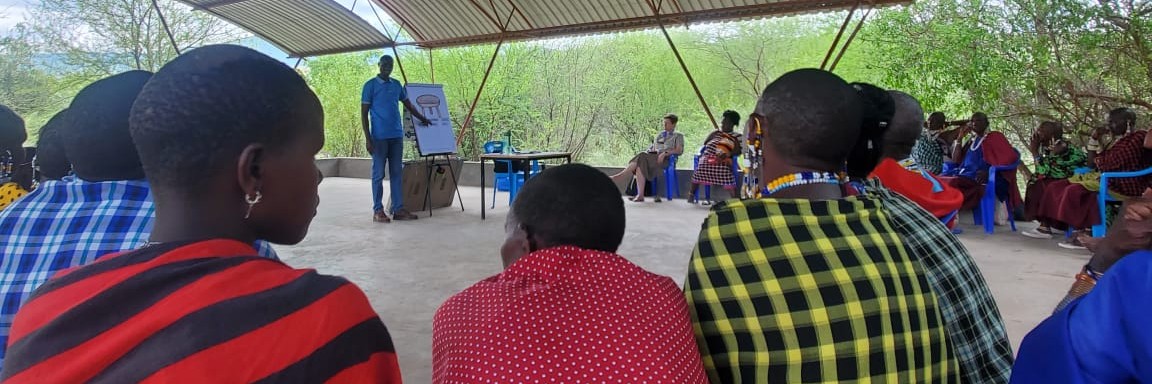
The lessons are developed to engage active learners with good opportunities for small group discussions and reporting. We made sure there was one who could read and write in each group.
While there is too much to relay from the day, here are three important developments.
First, in working with developing the lessons with Suzana, we realized that “the greenhouse effect” was actually a distraction from the content as these people have never seen a greenhouse. So, it would take a huge effort to explain a greenhouse to then abstract it in the metaphor. Thus, we’ve been using the “blanket effect.” The Maasai are known for their blankets, and my flipchart picture has a Maasai blanket keeping in the “planet warming gases.” Julius, a good Maasai, had his Maasai blanket which was used for a visual demonstration! Of course, I got a picture!
Second, one woman asked, “Why should we be concerned about taking care of the environment, because the government is just going to take away our land.” Oh, this makes my heart ache for the Maasai. Yes, the government is eager to take Maasai land through weaponizing conservation as a ruse to increase tourism revenues, especially lucrative hunting safaris. (See McCrummen, Stephanie. “‘This Will Finish Us:’ How Gulf Princes, the Safari Industry, and Conservation Groups Are Displacing the Maasai from the Last of Their Serengeti Homeland.” The Atlantic, 8 April 2024.)
Julius invited me to respond. I said (which was translated to Maa), “First, God has commissioned us to care for God’s creation. It is first God’s creation. Second, many Maasai are working together to protect traditional Maasai lands, and it is making a difference.” It became understood that the women are being left out of the conversations. The men are in seemingly endlessly talking about how to protect their lands and are in dialogue with the local leaders, but the information about the meetings and what is said is not being passed onto the women. So, Julius, who has been in some of the dialogues was able to bring in some of the information. How discouraging it must be to be marginalized within your own community due to the patriarchal structures. Traditionally, the men think of the women as being like children and not having the mental acuity to engage in the important discussions.
Thus, these lessons were not only important for the content of creation care in a Maasai context (integrating biblical creation care, traditional environmental knowledge, and climate science), but this day ended up equipping the women with information to be stronger participants in their own community and a bit of empowerment to be able to engage in the dialogues with the men on issues that have a huge effect upon their and their children’s lives.
Finally, at the end of the sessions, one of the women stood up—of her own initiative—and said that these lessons were very important. These lessons need to be shared farther with the other women and even with the men! Bethany turned to me, with the translation, and said then commented, “There could not be a better compliment than this!”
So, yes, it takes more effort to engage the women who were never given an opportunity to go to school, but as one of my students, Rebecca, at the MaaSae Girls Lutheran Secondary School taught me: “If you teach the mama, the whole family will learn!” Yes, the research protocol is messy for this group, but the greatest good is being a blessing to the women—not me trying to get clean research data. Bethany confirmed that this was a blessing for the women. Hallelujah!
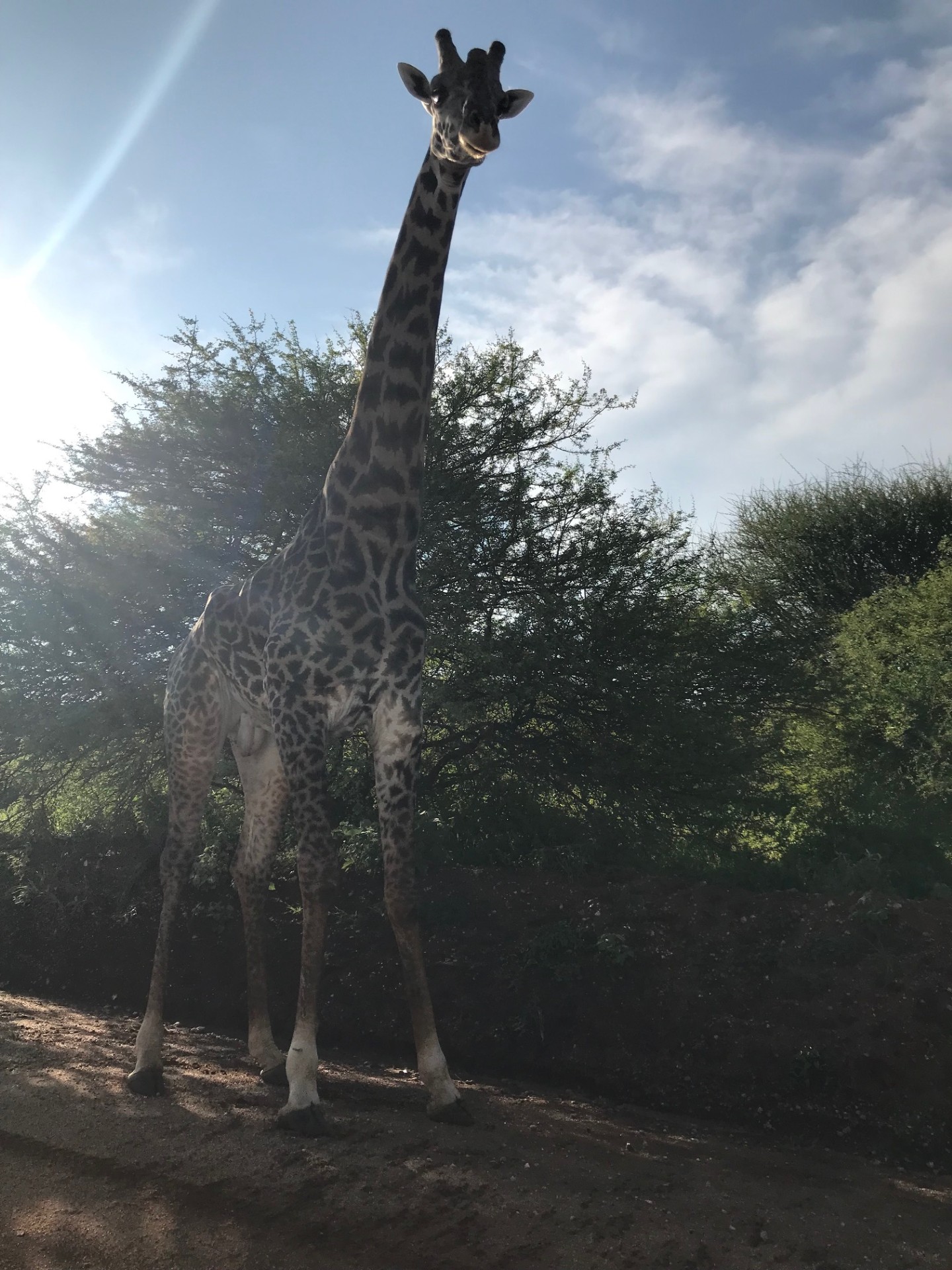
P.S.: And it is pretty cool going to Ketumbeine, where we get to see elephants, giraffe, hyena, impala, etc.!
P.S.S: I paid for a car wash also with a rental of my friend car. Thanks Laurie!
Mikitamayana Engai! / Mungu akubariki! / God bless you!
Hallelujah! I wrote 2 grants that raised $54,000 to build a mothers’ hostel at the Oldonyosambu Theological College.
I recruited Rev. Dr. Suzana Sitayo to be a stakeholder on my research project, as in addition to being on the faculty at Tumaini University Makumira (TUMA), she is also principal of Oldonyosambu Theological College (OTC), which focuses on training the lay pastors for the North Central Diocese of the ELCT, a predominantly Maasai area. The training is mostly through theological education by extension (TEE), but twice a year, the student come for a week or so at OTC.
However, this residential visit is very difficult for mamas, because there isn’t adequate housing. The dormitory-style housing was built for men by the German missionaries many decades ago. But in Maasailand, all the women in the village are married and then are raising children. Each child is nursed for 2-3 years, and the next child comes with the next round of nursing. So, it is very difficult for Maasai women to access theological education in order to be equipped as a lay pastor and serve their church community. This is one of the few opportunities for rural Maasai women to have opportunities beyond being a mama.
Thus, Suzana’s idea was to build a mothers’ hostel, where a few en-suite rooms are available with an extra bed for a family member attendant. This may be a grandma or a sister with her own young child. The TEE student can breastfeed during the breaks. We hope that within 1 year, we will have our mother’s hostel ready. A quarter of the planned project is funded by the Faith Evangelical Lutheran Church Endowment Foundation in Decatur, IL. And three-quarters is funded by the Lund Missionary Society in Sweden, with Operation Bootstrap Africa (OBA) willing to serve as the project manager. OBA has experience with brining construction projects to successful completion.
There will be still a need to furnish the rooms for the mamas, and I’m hoping to get solar panels for the college. So, I continue to pray and think innovatively.
In summary, this is more than a building project; it is a women’s empowerment opportunity in a very patriarchal society! This hostel resource will provide access to mamas to live out their calling as a minister of the gospel and serve their church and communities. Thus, we celebrate with Hallelujah’s for the generosity of the FELCEF and the Lund Mission Society.
Mikitamayana Engai! / Mungu akubariki! / God bless you!